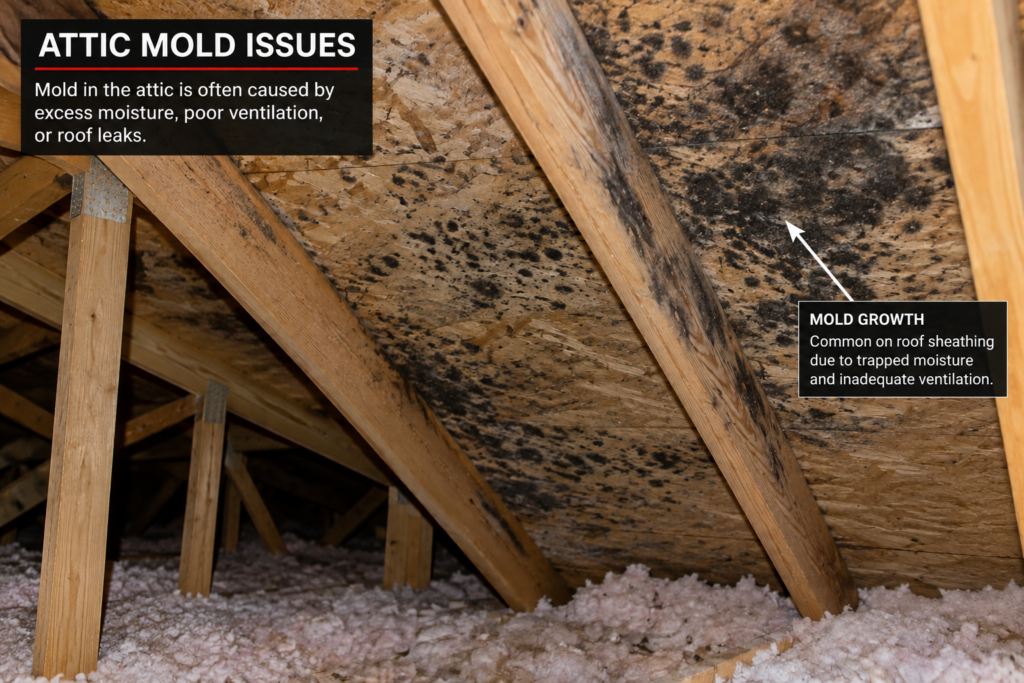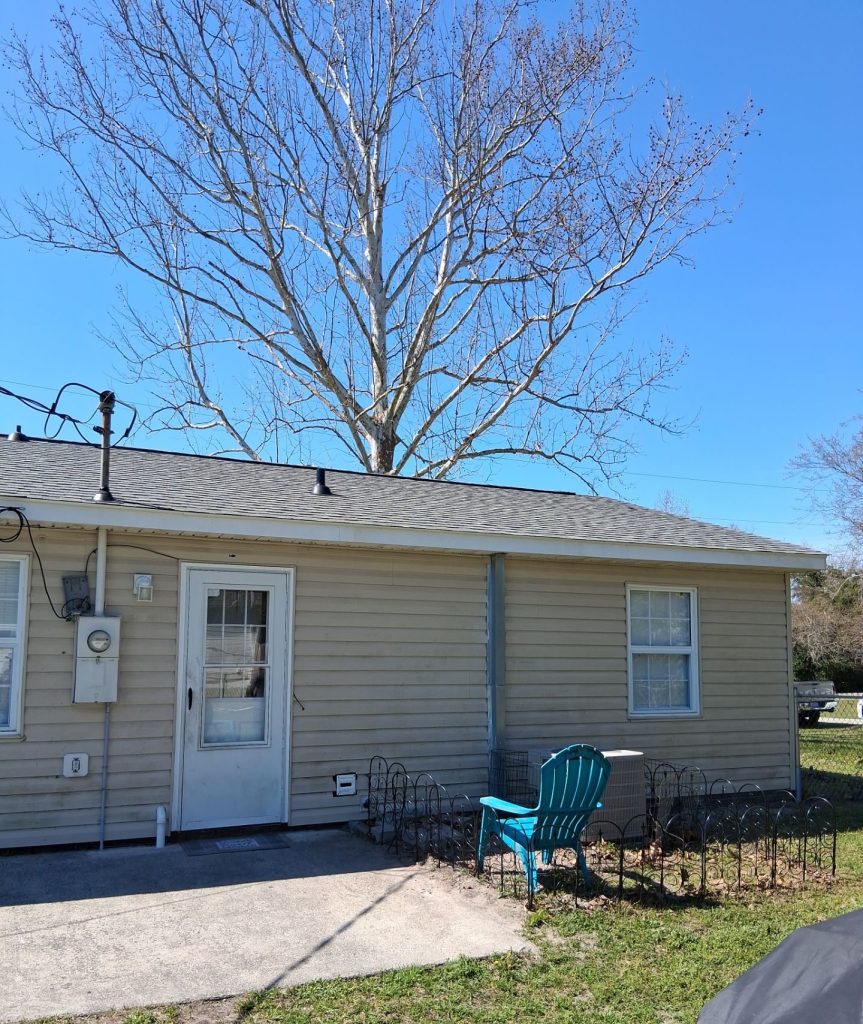

A ceiling stain near an air vent can send you looking for a roof leak. But in a coastal North Carolina home, the source may also involve humid attic air, cold ductwork, or an HVAC drainage problem. Repainting the ceiling treats the mark. Finding the moisture source is what helps prevent another repair.
RGR’s new Coastal Attic Guide explains how the roof, attic, insulation, and HVAC system work together. The free, 11-page report introduces our conditioned attic approach, including the inspection work that comes first and the trade-offs homeowners should understand before choosing a conversion.
Read the Coastal Attic Guide
Browse all 11 pages right here. Use the arrows to turn pages, or zoom in for a closer look.
Download the PDF · Open the dedicated guide page
Why coastal attics deserve a closer look
Think about a cold drink on a humid afternoon: water collects on the outside when the surface is cool enough for moisture in the surrounding air to condense. A cold duct surface can create a similar problem. In an attic, that moisture can affect nearby insulation and eventually show up on the ceiling below.
The location of a stain alone does not establish its cause. Roof penetrations, flashing, duct insulation, air leakage, and HVAC condensate drainage may all need attention. Keep a record of when the stain changes, whether the AC is running, and whether recent rain seems connected. Share photographs taken from a safe location and any previous repair history.
For a closer look at that first diagnostic step, read Roof Leak or Condensation? The new guide goes further into what a coordinated attic improvement could involve.
What is a conditioned attic?
A conditioned attic brings the attic inside the home’s thermal boundary. Instead of treating the ceiling below as the primary insulation boundary, an appropriate design places insulation and air-control measures at the roofline and provides a way to manage attic moisture.
This can place attic ductwork and equipment in a less extreme environment. The U.S. Department of Energy’s Building America research describes the energy-performance benefits of properly designed unvented, conditioned attics when HVAC systems are located overhead. Actual results depend on the house, duct condition, equipment, and installation.
Sealing a space does not automatically make it a properly conditioned attic. Building Science Corporation’s Residential Spray Foam Guide emphasizes the need for moisture removal in unvented conditioned attics. Insulation, air sealing, and the moisture-control plan need to be considered together.
How RGR approaches the whole attic system
Our guide lays out a sequence that begins with understanding the house, rather than choosing an insulation product first:
- Diagnose the existing conditions. Review the roof, visible decking, moisture history, insulation, and duct or equipment concerns. Address the source of existing damage before covering an assembly.
- Plan around the roof’s condition. A newer roof and an aging roof may call for different approaches. If roof replacement is already needed, discuss the roof and attic work together.
- Define the conversion. RGR’s approach uses closed-cell spray foam at the roofline where appropriate, coordinated air sealing, and removal of existing attic-floor insulation as part of the planned scope. Details depend on the existing construction.
- Plan for moisture control and monitoring. Temperature and humidity monitoring help track performance. A dedicated dehumidifier may be part of the solution when the home requires it; the HVAC and moisture-control strategy should be established before the work begins.
- Discuss ongoing inspection. The guide describes optional annual drone-based thermal roof mapping. Thermal patterns can identify areas for further investigation, but they do not prove that every leak has been found.
Understand the trade-offs before you decide
A conditioned attic is a larger undertaking than adding insulation to an attic floor. Closed-cell foam can make the roof deck harder to inspect from below and reduces its ability to dry inward. Those considerations are part of why roof condition, existing moisture, and future inspection access belong in the conversation from the start.
Ask what is included in the proposal, how existing damage will be handled, who will coordinate HVAC-related work, and how the completed space will be checked. Request project-specific details on applicable permits, product requirements, and protective coverings. Avoid comparing proposals by foam thickness alone.
If a roof replacement is part of the project, you can also discuss FORTIFIED Roofing. It is a separate roof-strengthening program with its own requirements. Attic insulation alone does not create a FORTIFIED designation, and any available grants or insurance benefits need separate eligibility confirmation.
Does your home need a full conversion?
Not every moisture problem calls for a conditioned attic. A targeted roof repair, duct correction, or equipment service may address the actual cause. Repeated ceiling stains, sweating ducts, rusty vent covers, musty odors, or an uncomfortable upstairs are reasons to investigate—not proof that one particular solution is required.
For homeowners in Wilmington, Leland, Hampstead, and the surrounding coastal communities, the useful starting point is a clear diagnosis and an explanation of the available options. RGR’s guide helps you prepare for that discussion.
Read the guide, then talk through your attic concerns
Browse the Coastal Attic Guide online with page navigation and zoom, or download the PDF to keep or share. It covers the symptoms, RGR’s proposed system, monitoring, and the practical trade-offs in one place.
Ready to discuss your property? Request an attic diagnosis or call (910) 408-6026. Include your address, the symptoms you have noticed, and any known roof or HVAC history so the team can help identify the next step.
Share this article