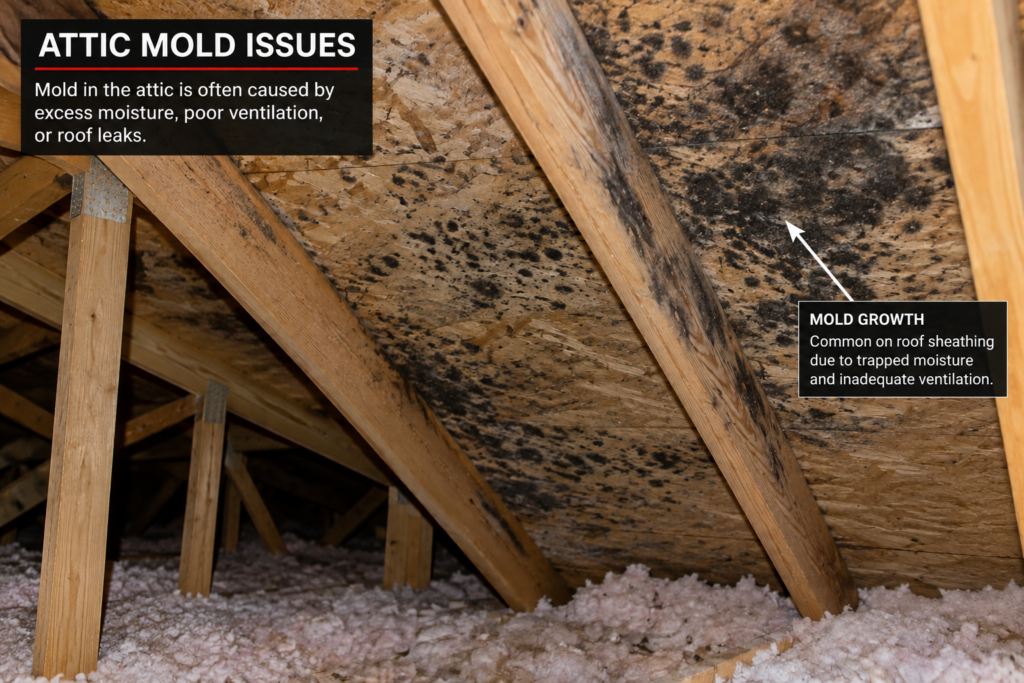
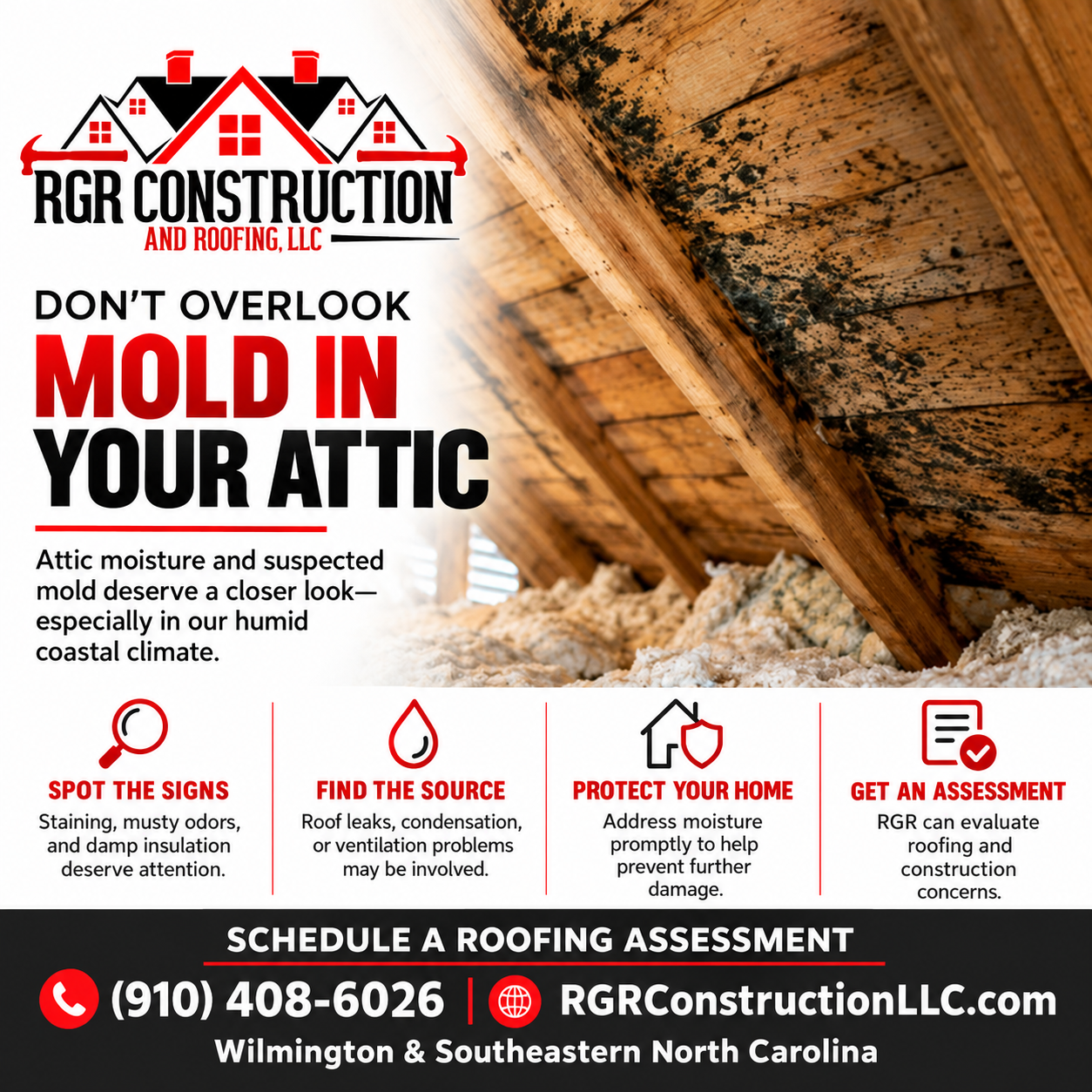
In Southeastern North Carolina, we spend a lot of time thinking about what is happening on top of the roof. What is happening underneath it can be just as important. Suspected mold, staining, damp insulation, or moisture on roof decking can be reasons to take a closer look at the attic and the building systems around it.
Finding a dark spot does not automatically mean you need a new roof. The useful starting point is to identify the moisture source, understand the affected materials, and decide which professional should evaluate each part of the problem.
Why does moisture collect in an attic?
The EPA’s guide to mold and moisture explains that moisture control is central to preventing mold growth. Cleaning a visible area without correcting the water problem can allow the problem to return.
Possible contributors include roof leaks, flashing defects, plumbing or HVAC moisture, humid air moving from the living space, and exhaust ducts that release moisture into the attic. Several conditions can exist together, so the location of a stain is only one part of the investigation.
Bathroom exhaust deserves particular attention. The Department of Energy’s Building America guidance calls for bathroom fans to discharge outdoors. A disconnected duct or a duct ending inside the attic can introduce moisture even when the fan sounds as though it is working normally. Have the route and connections checked by an appropriate professional.
Five signs your attic deserves a closer look
1. Changing discoloration on decking or framing
Dark or irregular marks on wood deserve attention, particularly if they are spreading or look different from earlier photographs. Color alone does not identify mold or establish what caused the staining. Record what you can see and leave diagnosis to the appropriate professional.
2. A persistent musty odor
A musty smell can prompt a moisture investigation even when the affected area is not obvious. Note where the odor is noticeable and whether it changes after rain or during particular seasons. An odor alone does not identify a roof leak.
3. Damp or stained insulation
Wet insulation calls for a review of both the water source and the affected material. Tell the contractor about nearby ceiling stains and any known HVAC, plumbing, or roof work. The repair discussion should include materials beneath the roof as well as the covering above it.
4. Water marks near roof openings
Describe staining near plumbing vents, chimneys, skylights, and other roof connections. Water can travel along building components before becoming visible, so the spot inside the attic may not sit directly below the entry point.
5. Droplets or recurring damp surfaces
Condensation is another possible source of moisture. Ask about the timing, indoor humidity, air leakage, insulation, and mechanical systems. Those questions help distinguish rain entering the building from moisture collecting on a cool surface.
Does attic mold mean the roof is leaking?
A roof leak is one possibility. Condensation, exhaust duct problems, or mechanical and plumbing issues can produce moisture without a failure of the roof covering. RGR’s guide to roof leaks and condensation in coastal NC homes explains why the source needs to be considered before choosing a repair.
An assessment may identify damaged shingles, a flashing detail, or a penetration needing attention. It may also identify reasons to involve an HVAC, plumbing, or building-performance professional. New roofing alone will not correct an unrelated moisture source.

Why persistent attic moisture deserves attention
Roof decking and framing are part of the building beneath the visible shingles or metal panels. Persistent moisture can contribute to deterioration, while affected insulation and finishes may need separate attention. Understanding the extent of the damage helps define a complete repair scope.
Ventilation is also part of a larger design. Air sealing, insulation, exhaust routing, and whether the attic is intended to be vented or unvented all matter. Adding vents without evaluating the assembly is not a substitute for finding the source.
What to do if you find mold or moisture
Arrange an evaluation and gather useful information without disturbing the affected area. You do not need to enter an unsafe attic, move insulation, or touch suspected growth to start the conversation.
- Record when you first noticed the concern and whether it changes after rain.
- Provide photographs taken from a safe, accessible position.
- Share roof age, previous repairs, and recent roofing, HVAC, or plumbing work if known.
- Describe attic access and any occupied rooms affected below it.
- Ask how the moisture correction, material repairs, and any mold assessment or cleanup will be coordinated.
EPA recommends using a contractor experienced in mold cleanup when professional cleanup is needed. Suspected hidden growth also calls for care because opening affected materials can release spores. Discuss health concerns with a healthcare professional.
What RGR can evaluate and repair
RGR Construction and Roofing, LLC can review accessible roofing and construction conditions and discuss a defined scope for the affected work. Depending on the findings, that may involve roof leak and flashing repairs, a roof replacement assessment, or related structural construction repairs.
A roofing assessment and mold assessment serve different purposes. Confirm who will handle each part of the work, what can be evaluated before materials are opened, and how concealed conditions will be documented. Structural concerns may also require an engineer’s evaluation or repair plans.
Attic Moisture Questions
Does attic mold mean I need a new roof?
Not necessarily. Roof leaks are one possible moisture source, but condensation, exhaust ducts, plumbing, or HVAC issues may also be involved. Identify the source and the condition of the roofing before deciding on repair or replacement.
Will adding attic vents solve the moisture problem?
Not automatically. Ventilation needs to be considered with air sealing, insulation, exhaust routing, and the attic design. A vent change will not correct an unrelated leak or a disconnected exhaust duct.
What information should I share when requesting an attic moisture assessment?
Describe when you noticed the concern, whether it changes after rain, and any recent roofing, HVAC, or plumbing work. Share photographs from a safe, accessible position and explain the attic access. Confirm who will handle roofing repairs and any separate mold assessment or cleanup.
Schedule a roofing assessment in the Wilmington area
Your attic may be out of sight, but unexplained moisture deserves a clear next step. Share your property’s location and what you have observed so the discussion starts with the actual concern.
RGR Construction and Roofing, LLC serves Wilmington and Southeastern North Carolina. Request a roofing assessment or call (910) 408-6026 to discuss accessible roof conditions and related construction needs.
Share this article