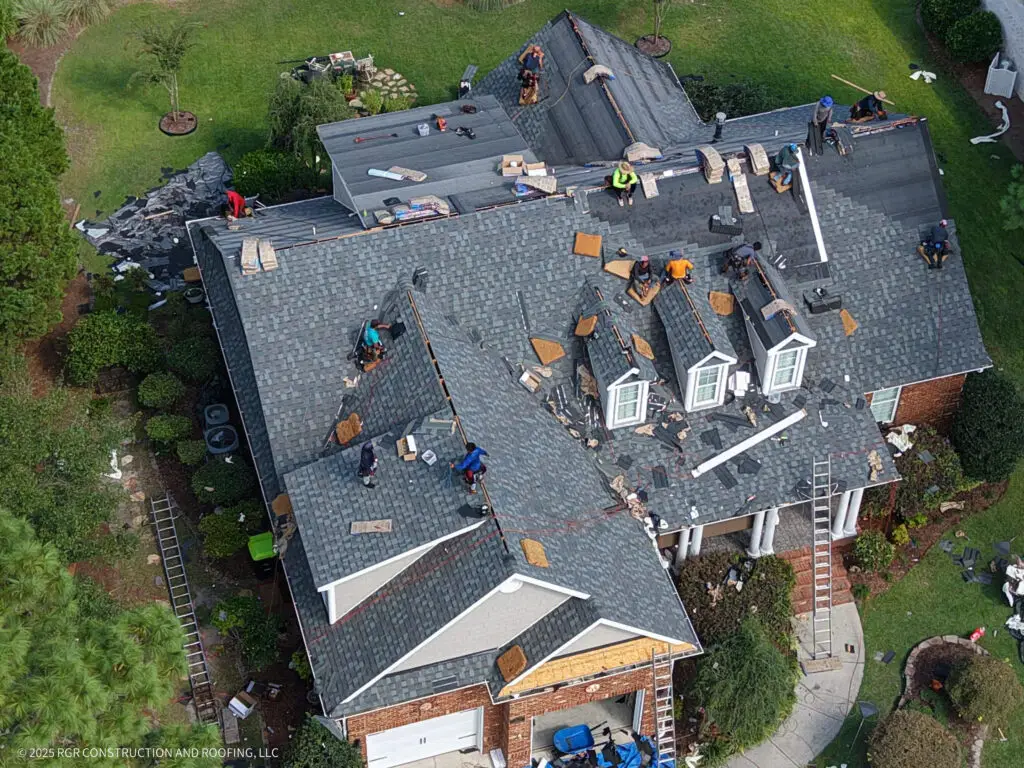
Choosing a roofing contractor in Wilmington starts with the problem you need solved. A storm-damaged roof, an aging roof covering, and unexplained interior moisture can require different scopes. The contractor should explain the findings, show you the relevant conditions, and put the proposed work in writing.
A polished advertisement or a low total does not tell you how the roof will be installed. Use the questions below to compare licensing, insurance, experience, estimates, and warranty terms before you commit.
Define the Problem Before Comparing Contractors
Write down what you have noticed and when it happens. Useful information includes the approximate roof age, prior repairs, storm dates, water-entry locations, and any available installation or warranty records. Photos taken from the ground or a safely accessible interior location can help.
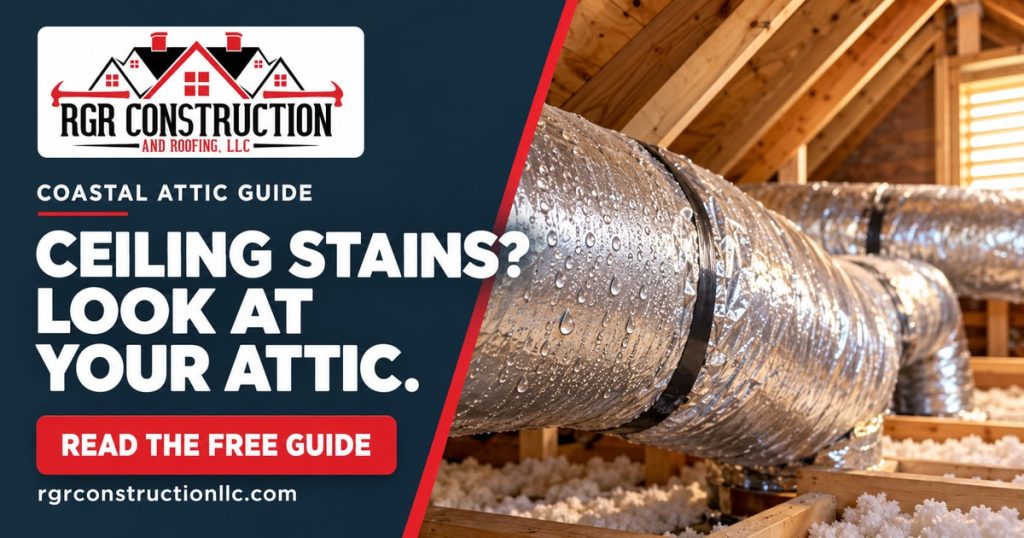
Do not assume every ceiling stain requires replacement. Water can come from roof defects, condensation, plumbing, exterior openings, or HVAC components. RGR’s guide to roof leaks and hidden condensation explains why a diagnosis should come before choosing the repair.
Ask each contractor what they inspected, what they could not see, and what remains uncertain. A useful answer distinguishes observed damage from assumptions about concealed conditions.
Verify the Business and Applicable License
Match the company name on the estimate to the business you are hiring. Confirm a working contact number, who will supervise the project, and how you can reach the company after completion. Check current license information directly rather than relying on a logo or an old screenshot.
North Carolina’s general-contractor licensing requirement generally applies when the cost of the undertaking is $40,000 or more. The appropriate classification and limitation also matter. Confirm the requirements for the actual project with the NC Licensing Board for General Contractors.
The Board’s classification guidance includes Building, Residential, and S(Roofing). Building and Residential classifications include roofing within their respective scopes. There is no separate “Residential Roofing license for homes under two stories” in that classification list.
RGR Construction and Roofing, LLC is an NC licensed general contractor, Unlimited, license #82033. You can use the Board’s current records to verify the business and license details before signing an agreement.
Ask for Current Insurance Documentation
Ask for a current certificate of insurance and verify the information with the issuing insurance professional. Discuss general liability, applicable workers’ compensation coverage, and whether the proposed roofing work is within the coverage represented. A license and insurance are separate matters.
A single dollar figure should not be presented as a universal legal insurance minimum for every roofing project. The appropriate coverage depends on the work and contractual requirements. Ask who will perform the installation and how subcontractor insurance is addressed when subcontractors are involved.
Keep the certificate and contractor agreement with your project records. If something on the certificate is unclear, resolve it before work begins rather than assuming that any document titled “insurance” covers the project.
Look for Relevant Coastal Construction Experience
Ask for examples that resemble your roof type and property. Steep roofs, low-slope porch connections, metal systems, and raised coastal homes do not share every installation detail. In beach communities, exposure and access may also influence product selection and work planning.
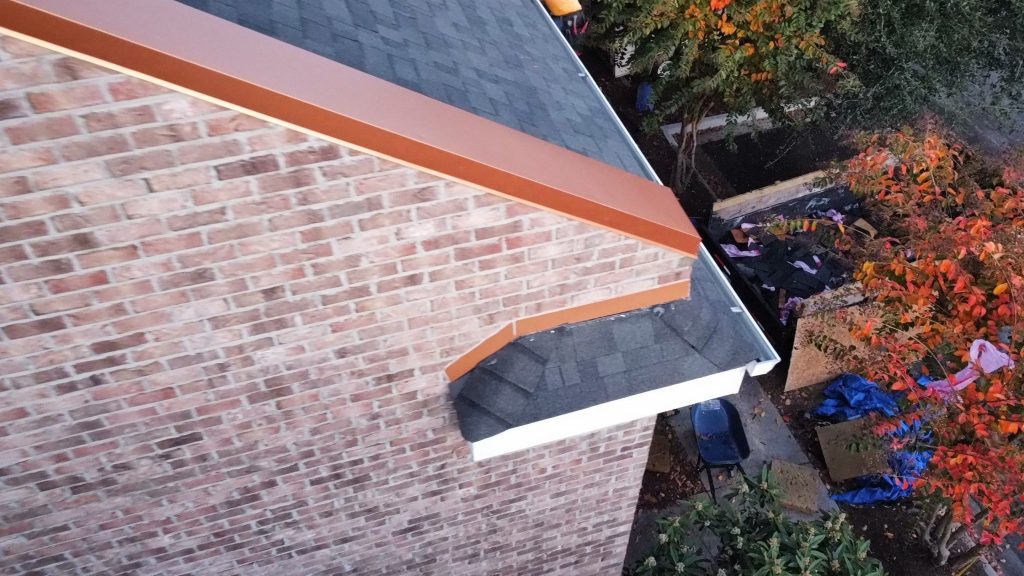
Useful project discussion goes beyond color and curb appeal. Ask how the contractor handles roof-to-wall flashing, penetrations, ventilation, deteriorated decking, and connections to existing construction. RGR’s project gallery provides examples to discuss, but your own roof still needs an assessment.
Manufacturer training, contractor certification, and a property’s FORTIFIED designation are different credentials. If a specific credential matters to the project, verify its current status with the organization that issues it and ask exactly what it covers.
Compare Written Scopes, Not Just Totals
Two quotes can look similar while including different work. One may include new flashing and defined decking allowances, while another leaves those items unclear. Request enough detail to understand what is included and how additional findings will be handled.
- Roof areas included, removal scope, and proposed materials.
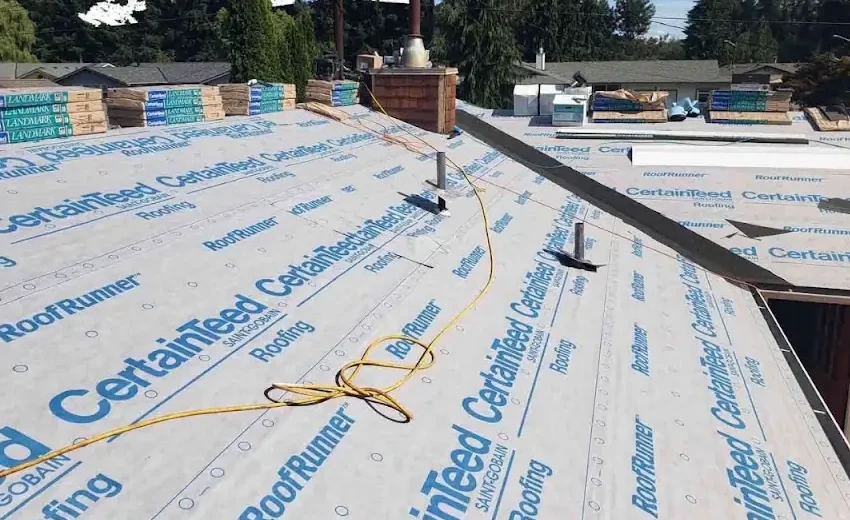
- Underlayment, roof-edge details, flashing, and penetrations.
- Ventilation evaluation and any specified changes.
- Decking or framing repair allowances and unit pricing where appropriate.
- Property protection, disposal, and cleanup.
- Permit responsibilities, inspections, and product documentation.
- Payment schedule, change approvals, and workmanship warranty terms.
If the contractor recommends roof replacement, ask what makes repair unsuitable. If the recommendation is a localized roof repair, ask about the condition of the surrounding materials and the limits of that repair.
Local access, roof geometry, existing layers, and concealed conditions make generic online pricing unreliable for a particular home. A site-specific scope is more useful than a national price range presented as a Wilmington quote.
Understand the Warranty You Are Actually Buying
Separate the material manufacturer’s warranty from the contractor’s workmanship warranty. Read the documents for the proposed product and installation. Coverage, exclusions, transfer provisions, registration, and maintenance obligations can differ between products and programs.
Do not treat a general table of roof materials as a warranty. A metal roof does not automatically carry one standard wind-speed promise, and “lifetime” does not explain all coverage conditions. Ask who responds to a problem and what costs or circumstances are excluded.
Warranty expiration alone does not establish that a roof needs replacement. Decisions should be based on condition, repairability, and the building’s needs. Keep the final warranty documents and proof of any required registration.
Clarify Permits, Scheduling, and Site Protection
Permit requirements depend on the jurisdiction and scope. New Hanover County’s permit chart says roofing using the same materials with no structural work does not require a permit. Other scopes can differ. Confirm current requirements for the property instead of relying on an assumed roof-size threshold.
Ask how the contractor will protect landscaping, decks, driveways, and interior areas, and where materials and debris containers will go. On a raised home, discuss access and work beneath or around the structure. Tell the contractor about parking restrictions and areas that need to remain accessible.
Weather and concealed repairs can change the schedule. The agreement should explain communication and temporary protection if the work is interrupted. A realistic plan is more useful than an unconditional completion promise made before the roof has been assessed.
Keep Insurance Claims Separate From Sales Promises
If damage may involve an insurance loss, give prompt notice to your agent or company and follow your policy’s instructions. Do not wait for a contractor’s inspection to report the loss. The NC Department of Insurance explains after-loss responsibilities and documentation.
A roofing contractor can document physical conditions and estimate construction work. The insurer decides coverage and payment. Be wary of any guarantee that hiring a particular contractor will produce approval or a specific settlement.
Questions to Ask Before Signing
- What condition is the proposed work intended to correct?
- What evidence supports repair or replacement?
- Who is responsible for supervision, approvals, and communication?
- What happens if concealed damage is found?
- Which warranties apply, and where are their written terms?
- What records will I receive at completion?
RGR provides roofing and general construction support in Wilmington and Southeastern North Carolina. If the problem extends into walls, framing, or other assemblies, our general construction services can help define the broader repair scope.
Hiring a Roofer: Common Questions
How do I check whether a contractor has the right license for my job?
Verify the appropriate classification, limitation, and current status with the NC Licensing Board for General Contractors. Licensing requirements depend on the undertaking, cost, and scope.
Why are the roofing estimates I received so different?
Compare the work included, material specification, allowances, exclusions, and warranty terms first. A lower total may reflect a different scope.
Does a ceiling stain mean the roof is definitely leaking?
No. Roofing, condensation, plumbing, HVAC components, and exterior openings can produce moisture symptoms. The source needs to be identified before choosing the repair.
Can a contractor promise my insurance claim will be approved?
No. A contractor can document construction conditions and propose repairs. The insurer determines coverage and payment under the policy.
Request an assessment from RGR or call 910-408-6026. Your Roof. Our Reputation.
Share this article