THE BIG PICTURE
A Better Roof Starts Under the Shingles
Two roofing proposals can list the same shingle color and still describe very different work. The difference may be in the decking, protective membranes, roof edges, fastening, or ventilation—details that become difficult to see once the job is finished.
RGR’s 5-Star Roofing Process explains those layers in order. It begins by exposing the roof deck, then addresses water protection, underlayment, drip edge, starter strip, shingle installation, and ridge ventilation. Service, cleanup, and workmanship coverage complete the homeowner experience.
For homeowners comparing roofing in Wilmington, NC, the useful question is: What work is included beneath and around the shingles? A clear written scope helps you understand the system you are buying, rather than judging the proposal by its finished appearance alone.
This guide follows RGR’s process materials and distinguishes the standard 5-Star system from RGR’s FORTIFIED roofing option. The installation details for your property belong in your project agreement.
- 01Strip the Existing Roof Down to the Deck
- 02Protect Vulnerable Areas With Ice & Water Shield
- 03Install a High-Performance Roofing Underlayment
- 04Protect the Roof Edges With Drip Edge
- 05Strengthen the Roof Edge With Starter Strip
- 06Precise Shingle Installation
- 07Upgraded Ridge Ventilation
- 085-Star Installation Should End With 5-Star Cleanup
- 09Workmanship & Roofing Warranty
01
Strip the Existing Roof Down to the Deck
The roof deck is the wood surface that supports the roofing materials. RGR’s documented process removes the existing roofing down to that surface so its condition can be inspected. Old materials can conceal damaged plywood, deterioration, and other deficiencies.
RGR’s process calls for replacing bad decking when it is identified. Covering a damaged substrate with new shingles does not correct the underlying condition. Exposing it creates the opportunity to evaluate the problem before new protective layers are installed.
Ask your roof replacement contractor how concealed decking damage will be documented, explained, and priced. The amount of repair work may not be clear until tear-off. Understanding that decision process before work starts makes it easier to review an unexpected finding.


02
Protect Vulnerable Areas With Ice & Water Shield
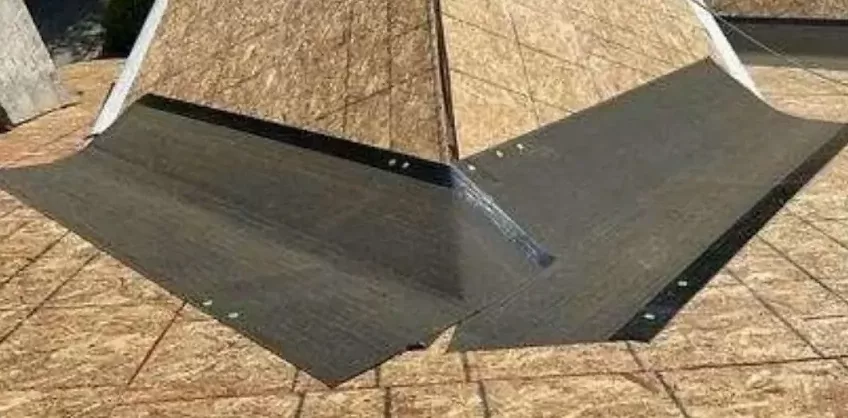
Ice-and-water shield is an adhered waterproof membrane installed beneath the roof covering. Its job is to provide added protection for the deck when water reaches below the shingles. Despite its name, it is relevant to rain exposure as well as winter conditions.
RGR’s standard 5-Star process places this protection at valleys, roof penetrations such as chimneys and vents, sidewalls, and similar transitions. Valleys collect runoff from adjoining slopes. Penetrations and wall intersections interrupt the roof surface and require careful water-management details.
The membrane supports those details; it does not eliminate the need for appropriate flashing and compatible installation. When comparing proposals, ask both whether ice-and-water protection is included and exactly where it will be installed.
03
Install a High-Performance Roofing Underlayment
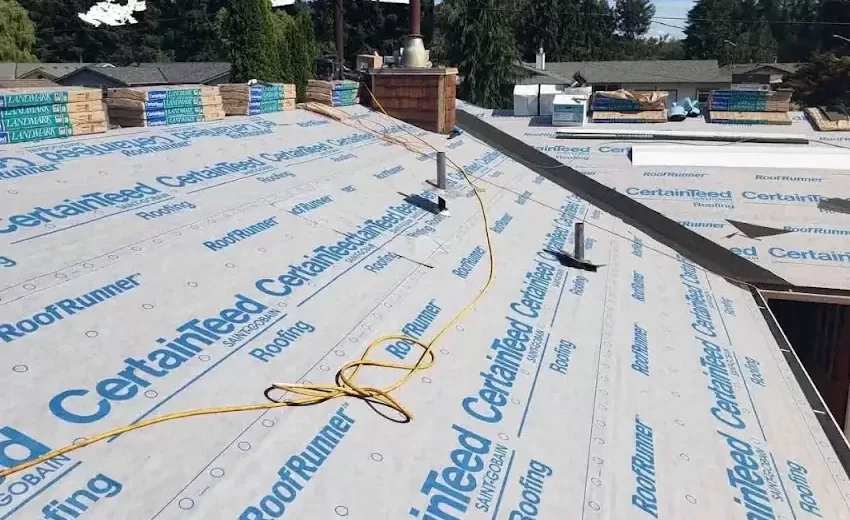
Roofing underlayment is the layer between the deck and the finished shingles. Homeowners rarely see it after construction, but it provides secondary protection beneath the primary roof covering.
RGR’s standard 5-Star materials specify CertainTeed synthetic underlayment. The source photograph shows RoofRunner. Synthetic underlayment and adhered ice-and-water membrane serve related but distinct roles; they should not be treated as interchangeable names for the same product.
A useful estimate identifies the underlayment and the areas receiving additional membrane protection. Ask how these materials work with the selected shingles and flashing. A brand name by itself does not explain the complete installation.
Questions to Ask When Comparing Roofing Estimates
- What type of underlayment is included?
- Is ice-and-water protection included, and where?
- Will damaged decking be identified and replaced?
- What roof-edge protection is included?
- Are the products and installation requirements identified in the written scope?
04
Protect the Roof Edges With Drip Edge
Drip edge is metal flashing installed at the roof perimeter. It helps direct water away from vulnerable roof-edge and fascia areas. The eaves are the lower roof edges; the rakes are the sloping edges at a gable.
RGR’s process includes drip edge as part of the roofing system and describes a staggered fastening pattern for its standard installation. Its purpose is practical: manage water at the boundary between the roofing and the building below it.
Ask where drip edge will be installed and how it will connect with the other roofing layers. Roof-edge work deserves its own line in the conversation, even though it occupies much less area than the shingles.

05
Strengthen the Roof Edge With Starter Strip
A starter strip is the beginning course of a shingle roofing system at the roof edges. RGR’s documented process uses a fully adhered starter strip, including along the eaves and rakes. Its FORTIFIED option also uses fully adhered starter.
Edges are important during high winds because they are potential starting points for lifting. Proper starter installation helps secure this part of the shingle system. It works with the drip edge, shingles, and fastening—not as an isolated accessory.
Ask your roofer to identify the starter product and its placement. A finished roof can look similar from the driveway whether these underlying details were explained or not. The written proposal should make them clear.
06
Precise Shingle Installation
Even premium shingles depend on proper installation. Their attachment to the deck is part of the system’s performance, not simply a way to hold them in place until the next course is laid.
RGR’s process describes six nails per shingle, placed in the reinforced nailing area, with a consistent fastening pattern. The location matters as well as the number. Six fasteners placed incorrectly do not become a correct installation just because the count is right.
The crew’s work must match the instructions for the selected product and the applicable project requirements. RGR’s documented approach emphasizes precise placement and attention to wind resistance. It should not be interpreted as one universal fastening instruction for every shingle product, roof shape, or exposure.
Salt-air exposure adds another consideration near the coast. RGR’s materials identify stainless-steel or hot-dipped galvanized nails in close proximity to saltwater. The appropriate corrosion-resistant fastener must be selected for the actual conditions and system requirements.
When reviewing roof replacement options, ask about both the selected shingles and the installation scope. RGR’s residential roofing services cover that broader discussion: materials, roof details, and the home those materials will protect.

07
Upgraded Ridge Ventilation
A ridge vent provides an exhaust path near the roof peak in a properly designed vented assembly. RGR’s 5-Star material specifies an upgraded rigid ridge vent, secured with a defined fastening pattern and ring-shank nails.
The source emphasizes durable attachment as part of the finished roof. Ventilation also needs to be considered as a system. A ridge vent must work with an appropriate intake path and the roof’s existing assembly; adding an exhaust component alone does not establish adequate airflow.
Ask which ventilation product is included and how the existing intake and roof configuration will be evaluated. Hip roofs, limited ridge length, and vaulted assemblies can require a different discussion. Our guide to roof leaks, condensation, and coastal moisture explains why airflow and moisture symptoms deserve a closer look.

08
5-Star Installation Should End With 5-Star Cleanup
The homeowner experience does not end with the last shingle. RGR’s process materials pair installation with service and cleanup, and invite questions or concerns as the project reaches completion.
Before work begins, discuss how the property and landscaping will be protected, where materials and removed roofing will go, and how access around the home will be managed. These practical details support an organized jobsite and make day-to-day expectations clear.
At closeout, discuss the final inspection, cleanup, any remaining questions, and the project records you will receive. Confirm who to contact if an issue needs attention. The objective is a completed roof and a property ready for the homeowner—not uncertainty about what happens next.
RGR’s project gallery offers examples of its work. Photos are useful evidence, but a clear scope and direct communication remain essential parts of choosing a contractor.
09
Workmanship & Roofing Warranty
RGR’s process materials state a 5-year workmanship warranty, subject to the warranty’s terms and exclusions. Workmanship coverage addresses covered installation defects; it should not be confused with coverage for every cause of roof damage.
Terms, conditions, limitations, and exclusions apply. Read the current warranty documents and the reporting requirements provided for your project. The agreement and applicable warranty terms control the coverage.
Extended manufacturer-backed warranty options may be available depending on the selected roofing system and program eligibility. Product coverage and workmanship coverage can have different conditions. Avoid reducing a manufacturer’s program to a blanket “50-year roof warranty.” Review what is actually included with RGR and consult CertainTeed’s warranty information for the applicable documents.
10
Standard RGR 5-Star Roof vs. FORTIFIED Roof
The standard 5-Star roof is RGR’s documented installation approach. FORTIFIED is a separate IBHS program with additional requirements and verification. Sharing individual components does not make the two systems equivalent.
| Roofing component | RGR 5-Star Roof | FORTIFIED Roof |
|---|---|---|
| Roof deck inspection | Included | Included |
| Damaged decking addressed | Yes, when identified | Yes, when identified |
| Deck fastening | Applicable roofing requirements | Enhanced FORTIFIED requirements |
| Water protection | Vulnerable areas protected | Enhanced sealed roof deck |
| Underlayment | CertainTeed synthetic underlayment | FORTIFIED-compliant sealed system; RGR describes full-deck adhered protection |
| Drip edge | Standard system | Enhanced FORTIFIED installation |
| Starter strip | Fully adhered | Fully adhered |
| Shingle installation | RGR 5-Star installation | FORTIFIED-compliant installation |
| Documentation | RGR project documentation | Additional evaluator documentation and designation review |
This comparison summarizes RGR’s source materials and project guidance. Actual assemblies must follow current manufacturer, code, and applicable FORTIFIED requirements. It is not a complete installation specification.
IBHS describes enhanced deck attachment, sealed decking, and stronger roof edges in its FORTIFIED Roof overview. A certified FORTIFIED Evaluator verifies the applicable work and documentation; IBHS issues a designation following its review. Ordinary project photographs do not replace that process.
Want the stronger FORTIFIED system?
11
What Should You Ask a Roofer Before Signing a Contract?
A useful roofing estimate gives you a basis for comparing the work, not just the total price. Ask these questions of every roofing contractor you consider, and request that the agreed scope be reflected in writing.
- Will you remove the existing roof to inspect the decking?
- What happens if damaged plywood is discovered?
- What type of underlayment will you use?
- Where will ice-and-water protection be installed?
- Is drip edge included, and on which edges?
- What starter strip is used?
- How are shingles fastened?
- What ventilation system is included?
- What workmanship warranty is provided?
- How will the property and landscaping be protected?
- How is the project documented?
- Do you offer FORTIFIED roofing?
Also clarify exclusions, how changes are approved, and which documents you will receive at completion. If you are planning the budget, review RGR’s financing information alongside the project scope. Payment arrangements do not change the need to understand the materials, installation, and warranty.
12
Roofing Built for Coastal North Carolina
Wilmington-area roofs face wind, wind-driven rain, and exposure to tropical storms and hurricanes. Homes closer to saltwater also need attention to material and fastener suitability. These conditions make roof edges, water-management layers, and installation details especially relevant.
Preparation starts with the roof that is actually on the home. A house in Wilmington, a beach property in Carolina Beach or Wrightsville Beach, and a home near Southport can have different roof geometry and exposure. A Wilmington roofing company should explain how the selected system fits those conditions.
“Hurricane-ready roofing” should describe a considered approach to preparation, not a promise that a roof cannot be damaged. RGR’s process centers on the deck, protective layers, attachment, ventilation, and workmanship. FORTIFIED adds its own requirements when that system is selected.
If the immediate concern is a localized leak, roof repair may be the appropriate discussion. If the roof has been affected by severe weather, start with storm damage roofing support. A roof inspection helps establish the condition before choosing the work.
RGR serves Wilmington-area homeowners and Southeastern North Carolina. Whether you hire RGR or another contractor, understanding the hidden parts of the roof puts you in a better position to compare proposals and ask useful questions.
Frequently Asked Questions
What work is included in the RGR 5-Star Roofing Process?
RGR’s documented process includes tear-off to inspect the deck, damaged-decking attention, targeted ice-and-water protection, synthetic underlayment, drip edge, fully adhered starter strip, precise shingle fastening, upgraded ridge ventilation, service, and cleanup.
Will my old shingles be removed before the new roof goes on?
Yes. The process describes stripping the existing roofing down to the deck so deficiencies can be inspected and bad decking replaced when identified.
Where is ice-and-water protection used on my roof?
RGR’s standard process uses ice-and-water protection at vulnerable areas such as valleys, penetrations, chimneys, vents, and sidewall transitions. It adds adhered water protection beneath the roof covering. Confirm the included locations in your proposal.
Does the 5-Star process automatically make my roof FORTIFIED?
No. FORTIFIED adds program-specific installation and verification requirements, including enhanced deck attachment, sealed decking, and roof-edge details. RGR installs the qualifying system; evaluator documentation and IBHS review are separate parts of designation.
Why does my estimate include a starter strip?
The starter course supports the shingle system at vulnerable roof edges. RGR’s process uses fully adhered starter at eaves and rakes as part of its approach to wind resistance.
What workmanship warranty applies to my roof?
Qualifying work performed by RGR is backed by a 5-year workmanship warranty, subject to the terms, conditions, limitations, and exclusions in your signed agreement and applicable warranty documentation. Coverage relates to covered work RGR actually performed.
How do I know which products are included in my proposal?
Confirm the exact products and options in your roofing proposal. The standard 5-Star materials specify CertainTeed synthetic underlayment and describe reinforced shingle nailing areas, fully adhered starter, drip edge, and rigid ridge ventilation.
How do I arrange a roofing estimate for my property?
Share the property address, the work you have in mind, any known damage, and your preferred timing. Photos taken from the ground or inside, previous repair records, and existing plans can help us understand the project. Contact RGR to discuss the next step.