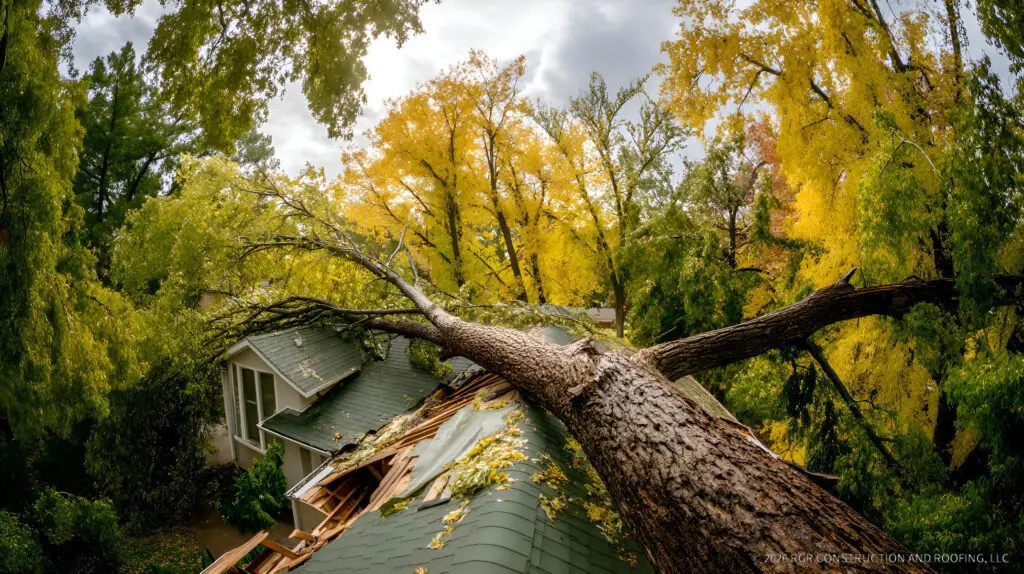
After roof damage, there are two jobs to coordinate: protecting the property and following your insurance policy’s claim process. A contractor can inspect the physical damage and prepare a repair scope. Your insurance company determines coverage and handles the claim.
Do not delay notifying your insurer while waiting for a roofer. The North Carolina Department of Insurance’s after-loss guidance calls for prompt notice to your agent or company, reasonable emergency protection, and documentation. Follow your policy and the instructions for your particular loss.
Step 1: Stay Safe and Notify Your Insurer Promptly
Keep people away from fallen branches, damaged electrical equipment, unstable ceilings, and areas with significant structural damage. Do not climb onto a wet or storm-damaged roof to collect evidence. If the situation is unsafe, use the appropriate emergency service before addressing the paperwork.
Contact your insurer or agent promptly. Ask how to report the loss, what information is needed, what deadlines apply, and how to arrange emergency protection. Record the claim number, the contact person, and the instructions you receive. A contractor’s schedule should not determine when you give notice.
Describe what you actually observed: a tree impact, missing shingles visible from the ground, water entering a room, or a stain that appeared after weather. If you are uncertain about the cause or date, say so rather than guessing.
Step 2: Document Conditions and Temporary Protection
Photograph damage from safe, accessible locations. Include wider views for context and closer views of affected interior finishes where it is safe to do so. Keep original photos and a simple timeline of when the problem appeared.
Arrange necessary temporary protection with qualified help. Keep receipts and photographs of the conditions before and after that work. Ask the insurer how to preserve evidence and when permanent repairs can proceed. Extensive repairs before the adjuster has an opportunity to inspect can make the loss harder to evaluate.
Keep one folder for correspondence, inspection findings, estimates, invoices, and receipts. This makes it easier to answer a request without relying on memory or searching through several text-message threads.
Step 3: Obtain a Professional Roofing Assessment
A roofer should identify observed damage, evaluate repairability, and describe the proposed construction work. Photos should connect the findings to a particular area of the roof. An estimate should explain materials, quantities, flashing details, and assumptions about concealed decking or framing.
RGR provides storm damage restoration and roof repair assessments in Wilmington and surrounding coastal communities. When water has reached walls, framing, or interior materials, the assessment may need to extend beyond shingles.
A contractor’s opinion about damage is not a coverage decision. Normal wear, storm damage, pre-existing conditions, and unrelated moisture can require different responses. The insurer applies the policy to the claim; a roof inspection cannot promise approval or a particular payment.
Step 4: Coordinate the Adjuster’s Inspection
Provide the insurer with the documentation it requests and make the affected areas available as instructed. You can ask whether your contractor may attend to explain the physical findings and proposed repair scope. Coordinate that attendance rather than treating it as a requirement for a valid claim.
Before the appointment, prepare a short list of locations and questions. For example: Was damage at the porch connection evaluated? Does the estimate include the affected flashing? What should happen if concealed deterioration is found during authorized work?
A contractor’s presence does not guarantee a larger settlement. Clear records and a specific scope help everyone discuss the same construction conditions without promising an insurance outcome.
Step 5: Review the Claim Decision and Repair Scope
Read the insurer’s written response alongside the contractor’s estimate. If you do not understand an item, ask the insurer or agent to explain it. Ask about the deductible, payment conditions, documentation needed after repairs, and any applicable deadlines. These details depend on the policy and claim.
When a construction item appears to be missing, the contractor can provide photographs, measurements, or an explanation of the work. Submit additional information through the insurer’s process. Do not assume a difference between two estimates is automatically an error or a promise of additional payment.
For questions about claim handling or unresolved concerns, consult the NC Department of Insurance’s claims and adjuster information. RGR’s role is roofing and construction, not deciding coverage or representing you as an insurance adjuster.
Step 6: Authorize Repairs With a Written Agreement
Once the assessment and required claim steps are addressed, review the construction agreement. It should identify the scope, payment schedule, responsibility for permits when required, cleanup, warranty terms, and how concealed conditions or changes will be handled.
If roof replacement is proposed, ask why repair is insufficient. Keep final invoices, completion photos, product information, and warranty documents. Send the insurer any completion records it requires and keep copies for your own maintenance history.
Common Mistakes to Avoid
- Waiting for an inspection before giving prompt notice of a loss.
- Assuming every roof problem is covered storm damage.
- Making extensive permanent repairs before coordinating with the insurer.
- Accepting a verbal promise of claim approval or a guaranteed payout.
- Comparing estimate totals without comparing the actual construction scope.
Roof Insurance Claim Questions
Should I notify my insurer before waiting for a roofing visit?
Do not wait for a roofer before giving prompt notice to your insurer or agent. Arrange the roofing assessment alongside the claim process and follow your policy’s instructions.
Can RGR guarantee that my roof claim will be approved?
No. RGR can document physical damage and propose repairs. Your insurer determines coverage and payment under your policy.
Should my contractor attend the adjuster’s inspection?
Contractor attendance can help explain construction findings when coordinated with the insurer, but it is not a guarantee of approval or a particular settlement.
Can I arrange temporary protection while the claim is being reviewed?
Follow your insurer’s instructions for necessary emergency protection. Use qualified help for unsafe work, document conditions, and retain receipts.
Contact RGR about a storm-damage assessment or call 910-408-6026.
Share this article