Roof repair is usually worth considering when the problem is isolated and the surrounding roof can support a durable repair. Replacement deserves a closer look when wear or damage is widespread, leaks keep developing in different areas, or the existing materials cannot be repaired reliably. For a Wilmington homeowner, the decision should come from the condition of the roof—not a ceiling stain alone or a birthday on the calendar.
A leak makes the question feel urgent. You want the water stopped, but you also want to avoid paying for work that leaves the larger problem untouched. The useful starting point is straightforward: what failed, how much of the roof is affected, and what would each option actually fix?
This guide focuses on existing asphalt-shingle roofs. Metal and low-slope roofing need assessments suited to their own materials and details.
When a targeted roof repair makes sense
A roof is a collection of connected parts. Shingles, flashing, pipe penetrations, underlayment, and decking do different jobs. A failure at one connection does not automatically mean every part has reached the end of its useful life.
A repair may be a reasonable choice when an assessment finds a specific defect, the surrounding materials remain serviceable, and the contractor can explain how the repair will connect to the existing roof. Examples include a limited area of damaged shingles or a flashing detail that can be properly rebuilt.
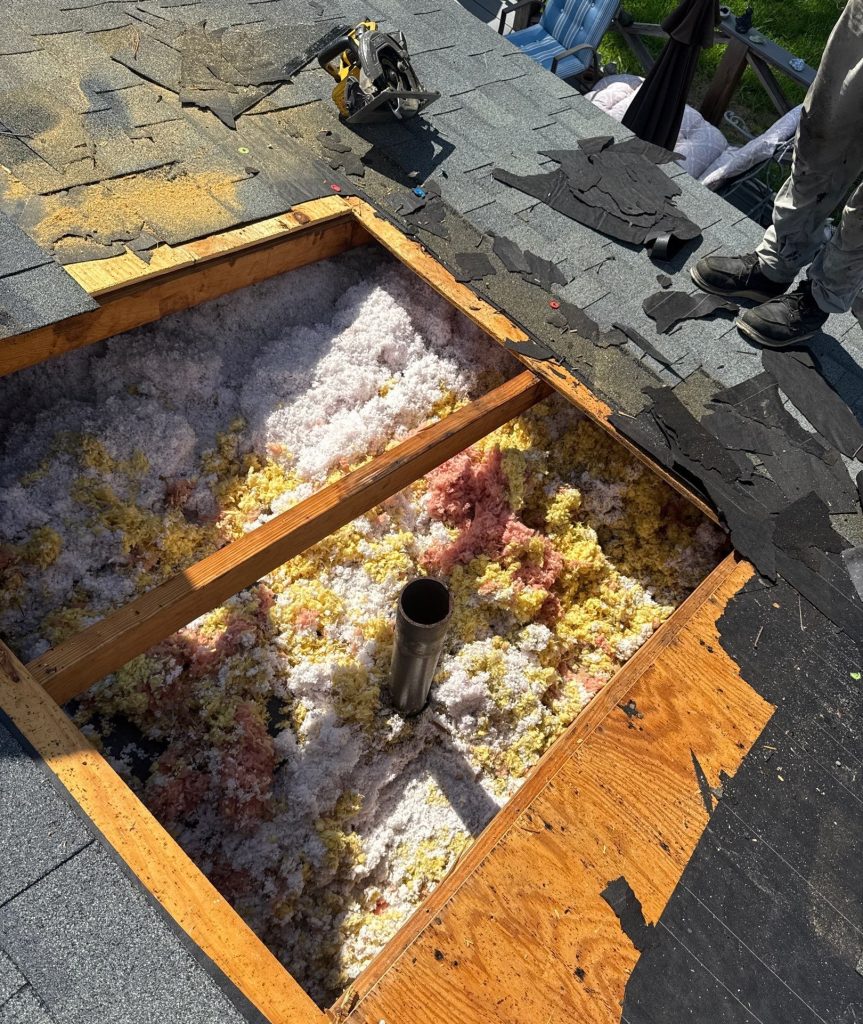
Ask to see the problem in photographs. Then ask what needs to come apart to correct it. Replacing the visible damaged piece may involve nearby shingles and underlying materials; the estimate should describe that work rather than simply promise to “seal the leak.”
GAF’s repair-versus-replacement guidance identifies roof age and the extent of damage as important considerations. Those are starting points for an assessment, not a substitute for looking at the actual roof. RGR’s roof repair services can help establish whether a focused scope fits the conditions.
When replacement deserves a serious comparison
The case for replacement gets stronger when the concern extends beyond one repairable detail. Widespread deterioration, several unrelated leak locations, or materials that cannot be worked on without further damage can make another patch a poor use of the budget. Have the contractor distinguish a recurring leak at the same unresolved spot from new problems developing across the roof.
Age adds context, but two roofs installed in the same year can be in different condition. Material selection, installation, exposure, and previous work all matter. Ask what observable findings support the recommendation. “It’s old” is less helpful than a clear explanation of which parts are failing and whether they can be repaired.
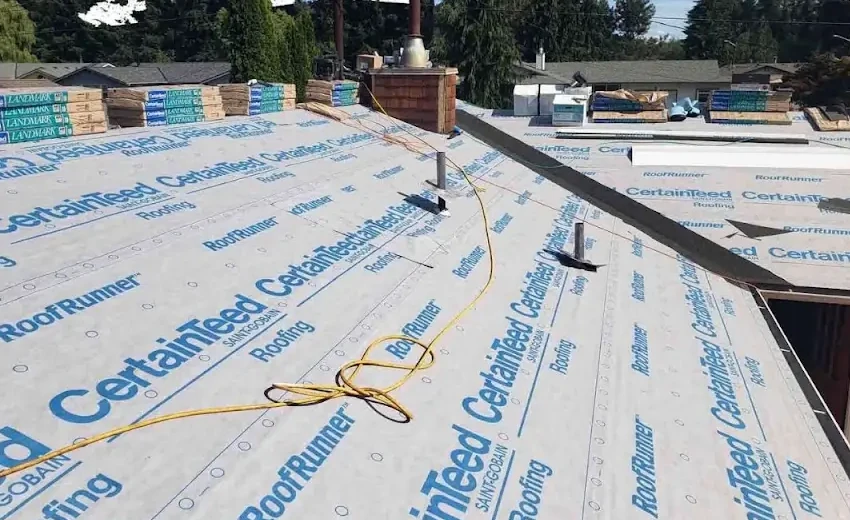
Replacement also needs a defined scope. New shingles alone do not explain how the project will address roof-to-wall connections, penetrations, ventilation, or damaged decking. Review those items in the proposal, including what happens if removal uncovers additional damage. Our roof replacement page explains RGR’s approach to the complete roof assembly.
Start with the source of the water
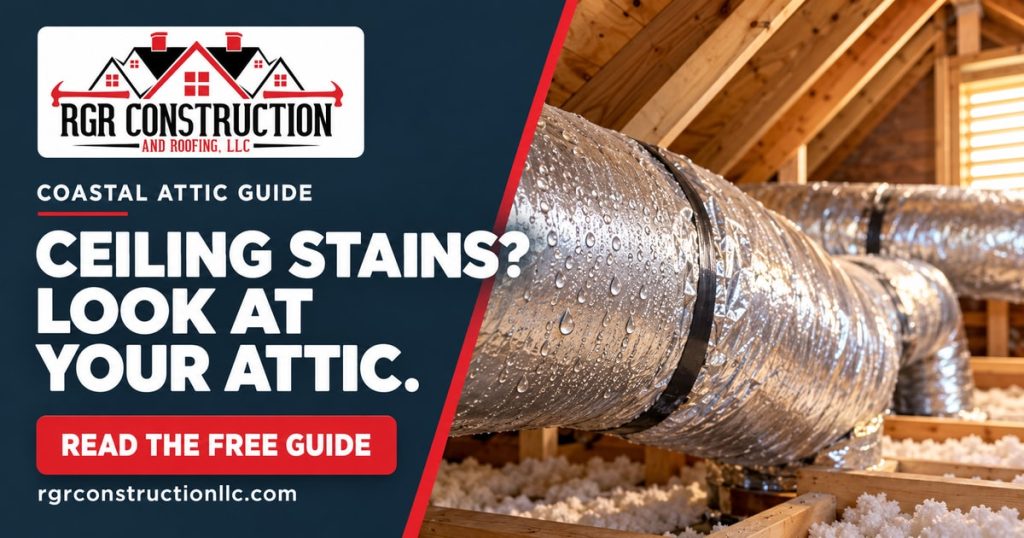
A brown mark on the ceiling tells you where moisture became visible. It does not, by itself, establish the entry point or prove that replacement is needed. Water can travel before showing up indoors, and moisture can have a source other than roofing.
Tell the contractor when you first noticed the problem, whether it follows particular weather, and what earlier repairs were attempted. Photos taken from the ground or a safely accessible interior location are useful. Do not climb onto the roof to investigate.
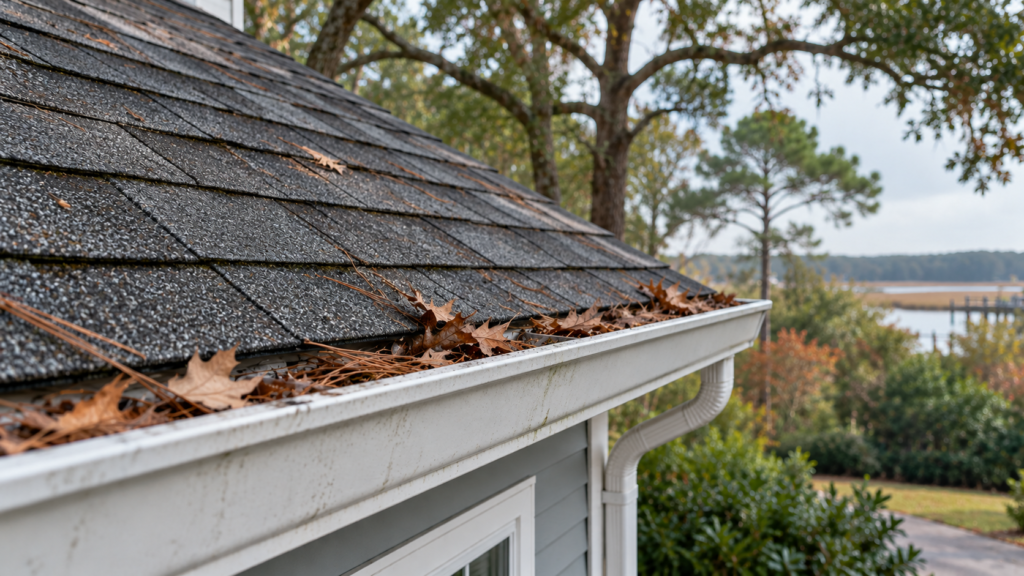
GAF’s roof leak guidance discusses several possible trouble spots, including flashing and roof penetrations. If the evidence points elsewhere, a roofing-only repair may miss the cause. RGR’s guide to roof leaks and condensation explains why that distinction matters in coastal homes.
Compare the work, not just the two totals
A repair quote and a replacement quote cover different amounts of work. Put them side by side and ask what problem remains after each option is finished. A lower initial price is useful only if the proposed work addresses the condition you are trying to resolve.
For the repair, ask which areas are included, what materials will be replaced, and what limitations remain elsewhere on the roof. For replacement, ask about removal and disposal, the proposed roofing system, roof details, property protection, cleanup, and the treatment of concealed damage.
Have the contractor identify allowances and exclusions in writing. If additional decking work is possible, ask how it will be documented, priced, and approved. That conversation is easier before the roof is opened and gives you a fairer basis for comparing proposals.
Also ask which written workmanship terms apply and which manufacturer coverage applies. Keep those documents with the estimate and completion records. A proposal should not leave you guessing whom to contact if a concern comes up later.
Questions worth asking before you decide
You do not need to become a roofer to make an informed choice. You do need an explanation that connects the recommended work to what was found. Bring these questions to the assessment:
- What is the identified problem, and can you show me the affected areas?
- Is the damage isolated, or are similar conditions present elsewhere?
- Can the surrounding roofing accept a durable repair?
- What would remain unresolved after the repair option?
- What concealed conditions could change the scope or price?
- What records and written coverage will I receive when the work is complete?
If two contractors reach different conclusions, compare their findings before comparing their totals. One may have identified a connection or concealed condition the other has not addressed. Ask each to explain the difference in plain language and provide the supporting photos.
Make a plan for your Wilmington home
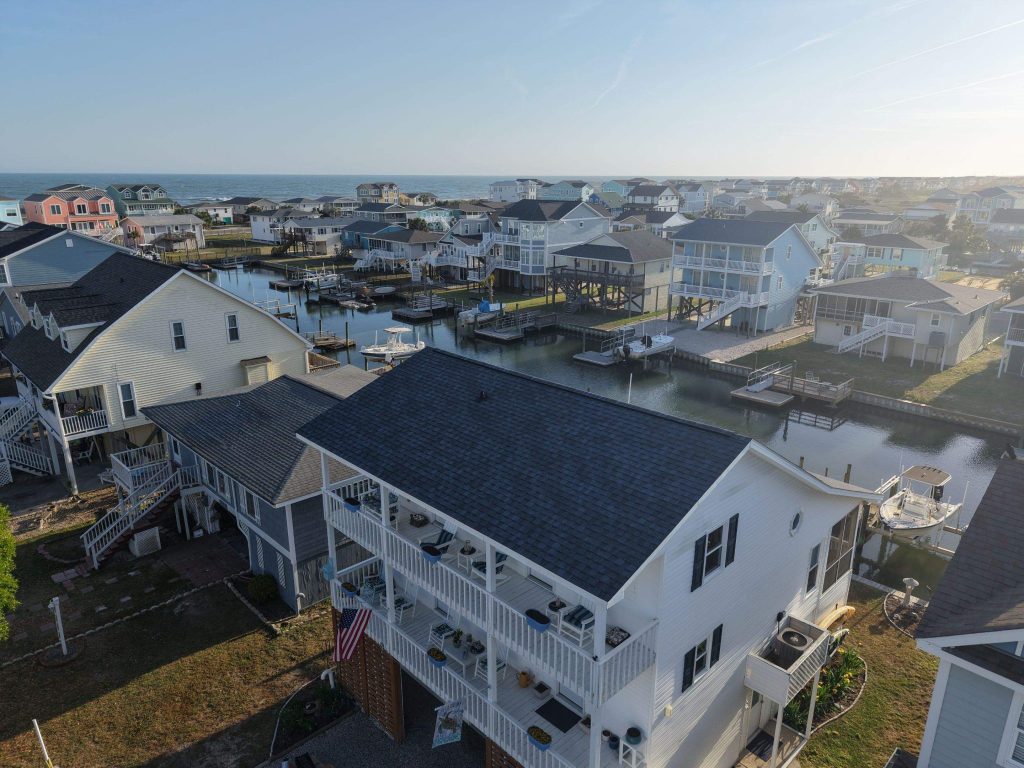
For Wilmington and nearby coastal communities, describe the property’s exposure and any history of wind-driven rain when requesting an assessment. Include the roof’s approximate age, previous repair records, and the timing you have in mind. Those details help frame the visit without deciding the outcome in advance.
You can also separate the immediate need from the longer-term decision. Ask whether temporary protection is needed while the permanent scope is developed. Make sure everyone understands whether proposed work is a temporary measure or the intended permanent repair.
RGR Construction and Roofing, LLC serves Wilmington and Southeastern North Carolina with roofing and connected construction services. Request an estimate or call (910) 408-6026. Share what you have noticed, and ask for a clear explanation of the repair and replacement options that fit your home.
Roof repair or replacement: frequently asked questions
Does one roof leak mean I need a full replacement?
No. One leak may come from an isolated, repairable defect. The decision depends on the source, the surrounding materials, and the condition of the rest of the roof. Ask for a diagnosis and documented findings before choosing the scope.
Should I replace my roof just because of its age?
Age is useful background, but it should be considered alongside the actual condition and repair history. Ask which findings support replacement and whether a durable repair remains practical. A calendar alone cannot show the condition of your roof.
Can damaged shingles be replaced individually?
Sometimes. A professional needs to assess the damaged area, the surrounding shingles, and suitable replacement materials. The scope may extend beyond the visibly damaged shingles so the repair can be properly integrated with the existing roof.
What if my roof still leaks after a previous repair?
Provide the earlier repair scope and explain when the leak returned. The source may not have been fully addressed, or a separate problem may exist. Request an assessment that explains those possibilities before repeating the same repair or committing to replacement.
What should I send RGR before requesting an estimate?
Send the property address, a description of the concern, approximate roof age if known, previous repair information, and safely taken photos. Include your preferred timing. RGR can then help identify the next step for reviewing your repair or replacement options.
Share this article