October is a useful time to take a fresh look at your roof and drainage before the next round of wet weather. Wilmington homeowners are still within Atlantic hurricane season, which NOAA says continues through November 30.
A short review can help you spot changes, gather useful photos, and decide what needs professional attention. Start from the ground and safely accessible indoor areas. Leave roof access, repairs, and elevated gutter work to qualified professionals.
Start with a ground level roof check
Choose a clear day and walk around the accessible sides of your home. Use binoculars or your phone’s zoom to look for missing shingles, raised or curled edges, and debris resting on the roof. Notice any roofing material that has fallen into the yard.
GAF’s ground-level inspection guidance identifies these as reasons to take a closer look with a professional. A walk around the property cannot confirm the condition of hidden layers or every roof slope.
Take a wide photo showing the area, followed by a closer view from the same safe location. Label the concern plainly, such as “rear roof above the kitchen.” You do not need to identify the material or diagnose the problem before asking for help.
Check the path rainwater takes
From ground level, look for visible leaves or sticks at gutter edges, disconnected downspouts, or sections that appear to sag or pull away. If you have noticed overflow during ordinary rain, record where it happens. Do not go outside during a storm to collect evidence.
The Insurance Institute for Business & Home Safety recommends clearing gutters and downspouts so heavy rain can drain away from the home. Arrange cleaning with an insured service when access requires a ladder. If overflow keeps returning after cleaning, ask for the drainage arrangement and gutter condition to be evaluated.
Keep notes on where water collects near the house, too. Roof runoff, damaged gutter components, and conditions on the ground may need separate attention. Describe what you see so the appropriate work can be identified.
Note branches and changes around the roof edge
Look for branches close to or resting on the roof. IBHS includes trimming nearby trees and branches in its storm-preparation guidance. Have a qualified tree professional assess work that involves large limbs, roof access, or overhead utility lines.
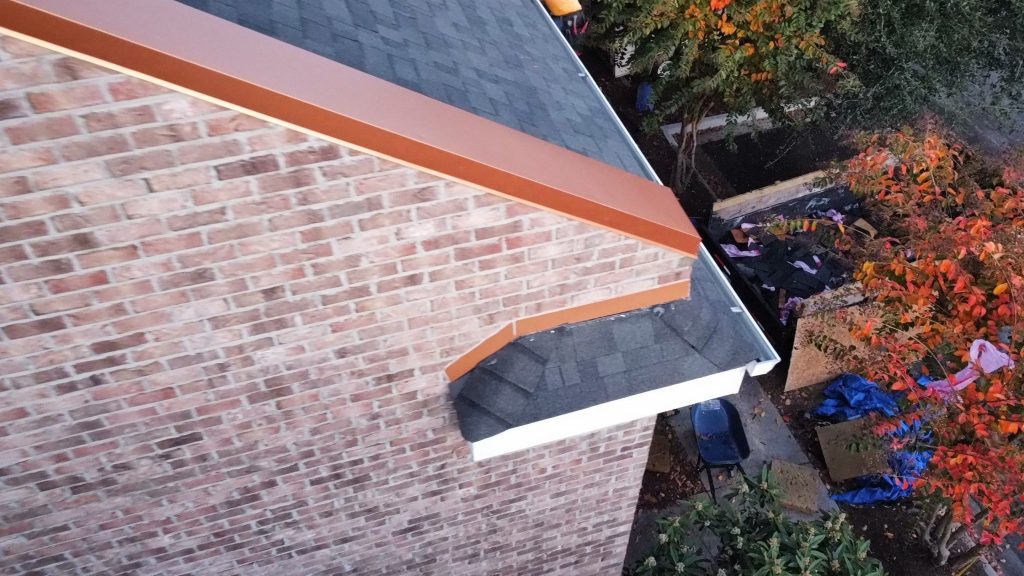
From a safe location, photograph visibly displaced trim, hanging gutter sections, or damage around roof edges. Keep people away from anything that could fall. After severe weather, follow local safety guidance and wait until conditions are safe before looking around. GAF’s post-storm roof guidance recommends documenting suspected damage from the ground and leaving roof access to professionals.
Bring indoor observations into the conversation
Look at ceilings and upper walls in the rooms you normally use. If a stain is new or has changed, take a photo and note when you first saw it. Record whether it appeared during rain, afterward, or during dry weather. Share any previous repair in that area.
Water can travel before it becomes visible indoors, so a stain does not pinpoint the entry location. RGR’s roofing services include reviewing reported concerns and accessible conditions to help define the next step. Mention active dripping when you contact a contractor, and keep clear of visibly sagging ceilings or water near electrical equipment.
Turn your observations into a clear repair request
Keep one short record for the property. Include:
- The address and the areas you want reviewed.
- Photos taken safely from the ground or inside.
- When each change appeared and whether it has happened before.
- The roof’s approximate age and prior repair records, if available.
- Access details, occupancy, and the best person to contact.
For a Wilmington rental or second home, ask the person on site to use the same room and roof-area descriptions. That helps connect an indoor report with an exterior photo without guessing.
When discussing work, ask which items need assessment, which can be handled as routine upkeep, and what the proposed repair includes. Have connected damage and any separate specialist work identified before agreeing to the scope.
Common fall roof maintenance questions
Does a missing shingle mean I need a new roof?
It calls for an assessment. The surrounding materials, extent of damage, and overall roof condition help determine whether a focused repair is appropriate.
Should I climb up for better photos?
No. Ground-level photos and a clear description are a useful starting point. Let the professional decide how to inspect areas you cannot safely see.
Can I wait for my seasonal check if the roof is leaking?
Contact a roofing professional promptly when you notice active leaking or new damage. Explain what is happening so the concern can be assessed.
Talk with RGR about your Wilmington roof
Have a concern from your fall checklist? Contact RGR Construction and Roofing or call (910) 408-6026. Share your property address, photos, and what has changed so we can discuss the appropriate next step for your roof or connected exterior repairs.
Share this article