Choosing a commercial roof is a building decision as much as a material decision. A restaurant with rooftop equipment, a warehouse with a large open roof, and a coastal office building can have very different requirements. The existing deck, drainage, insulation, wind exposure, and daily use all influence the right system.
This guide compares common roof types and the questions that affect cost and service life. A material name alone cannot tell you what an installed roof will cost or how long it will last. RGR evaluates commercial roofing in Wilmington and Southeastern North Carolina around the actual property and the owner’s priorities.
Start With the Existing Roof Assembly
Before comparing products, identify the roof covering, deck type, insulation, drainage paths, and history of leaks or repairs. A survey may reveal wet insulation, loose attachments, deteriorated flashings, or construction details that need attention regardless of the new surface selected.
“Flat roof” usually means a low-slope roof designed to drain. Replacing the membrane without addressing a drainage problem may leave the building with the same trouble spots. Discuss drains, scuppers, overflow provisions, and transitions around rooftop equipment as part of the scope.
Ask the contractor to distinguish a visual observation from a condition that requires additional testing or an approved opening. Moisture assessment and attachment requirements should be matched to the building rather than assumed from its age.
Single-Ply Roofing: TPO, PVC, and EPDM
TPO
Thermoplastic polyolefin is a single-ply membrane used on low-slope roofs. Its seams are heat welded. The assembly includes more than the sheet: insulation, cover board where specified, attachment, perimeter details, and penetrations all contribute to performance.
When comparing TPO proposals, ask which membrane and thickness are included, how the system will be attached, and how traffic around equipment will be managed. A less expensive sheet does not necessarily produce the lowest total ownership cost.
PVC
Polyvinyl chloride is another thermoplastic single-ply membrane with heat-welded seams. Product-specific chemical resistance can matter on buildings with grease exhaust or other rooftop exposure. Confirm compatibility with the expected conditions and the manufacturer’s requirements.
Do not assume that every PVC product has identical performance or that a particular membrane removes the need for equipment maintenance. Exhaust deposits, service traffic, and repairs by other trades still need management.
EPDM
Ethylene propylene diene monomer is a synthetic-rubber membrane. Its seams and flashing use compatible system components rather than the thermoplastic welding process used for TPO and PVC. Installation quality at joints, edges, and penetrations remains essential.
Ask about the proposed surface, attachment method, repair compatibility, and how rooftop access will be protected. The best choice depends on the complete assembly and the building’s use, not a blanket ranking of membrane names.
Asphalt-Based Roofs: Modified Bitumen and Built-Up Roofing
Modified bitumen uses reinforced asphalt-based sheets. Built-up roofing uses multiple layers assembled into the roof system. These are distinct systems with different application methods and specifications; the proposal should identify exactly what is being installed.
Questions to ask include how the roof will be attached, how the installation affects occupied areas, and how transitions to walls or equipment will be detailed. Work sequencing, access, odor controls where relevant, and protection of the business below should be discussed before installation.
GAF’s commercial roofing resources illustrate why membranes, insulation, cover boards, and accessories are specified as systems. Product documents should be part of reviewing an actual proposal.
Metal Roofing for Suitable Commercial Buildings
Metal may be an option where the roof geometry and building design suit the selected system. Panel profile, roof slope, attachment, movement, and transitions all matter. A standing-seam roof and an exposed-fastener roof do not have the same details or maintenance needs.
Coastal exposure makes material compatibility and finish selection especially important. Aluminum does not rust like steel, but describing any roof as immune to corrosion or maintenance is misleading. Fasteners, flashings, dissimilar-metal contact, and the environment must be considered together.
Ask how the specified products are suited to the property’s exposure and what exclusions apply to their warranties. RGR’s metal roofing services can help you compare a proposed assembly with the needs of your building.
Spray Foam and Coating Systems
Spray polyurethane foam roofing uses a field-applied foam layer with a compatible protective coating. Substrate preparation, application conditions, thickness, drainage, and coating maintenance affect the result. A continuous application does not mean that leaks are impossible.
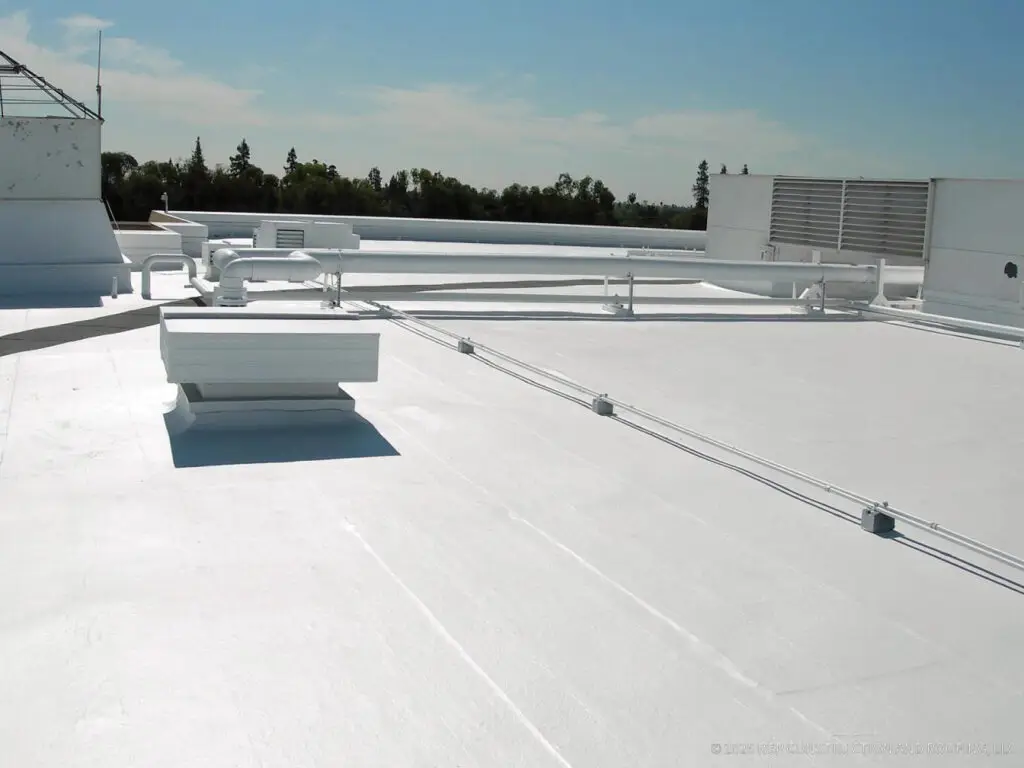
Roof coatings are also used on certain existing roof assemblies. They may be appropriate where the underlying roof is a suitable restoration candidate. They are not a substitute for addressing saturated insulation, deteriorated decking, failed details, or an incompatible substrate.
GAF’s coating-versus-replacement guidance emphasizes evaluating the roof’s condition. Ask what investigation supports a coating recommendation, which repairs happen first, and what preparation and application requirements apply.
What Determines Commercial Roofing Cost?
Generic national price-per-square-foot tables can hide major differences in scope. A recover over a suitable dry assembly is not the same project as a tear-off with wet-insulation removal, deck repairs, new drainage work, and extensive rooftop equipment.
- Existing conditions: roof layers, moisture, decking, and required repairs.
- System specification: membrane or panels, insulation, cover board, attachment, and edge details.
- Roof complexity: penetrations, parapets, transitions, curbs, and drainage.
- Access: building height, staging areas, lifting, and disposal.
- Operations: tenant access, working hours, equipment coordination, and weather protection.
- Approvals and warranty: design requirements, inspections, and the selected coverage.
Request a written proposal with quantities, exclusions, and procedures for concealed conditions. Compare the full scope, expected maintenance, and disruption to the business as well as the initial price.
How Long Will a Commercial Roof Last?
There is no reliable expiration date based solely on the material category. Service life depends on the installed system, workmanship, exposure, drainage, maintenance, and damage over time. A warranty term is a contract provision, not a prediction that the roof will fail when the term ends.
Ask for product-specific information and an assessment of the actual roof. Inspection records can show whether problems are localized and repairable or widespread enough to support replacement. Repeated leaks, wet insulation, or deteriorated attachments deserve investigation rather than another general lifespan estimate.
Set maintenance intervals using the system manufacturer’s requirements and the building’s conditions. Arrange additional assessment after significant weather or rooftop work when appropriate. Keep other trades informed about approved walking routes and how penetrations or equipment changes must be handled.
Reflective Roofs and Energy Performance
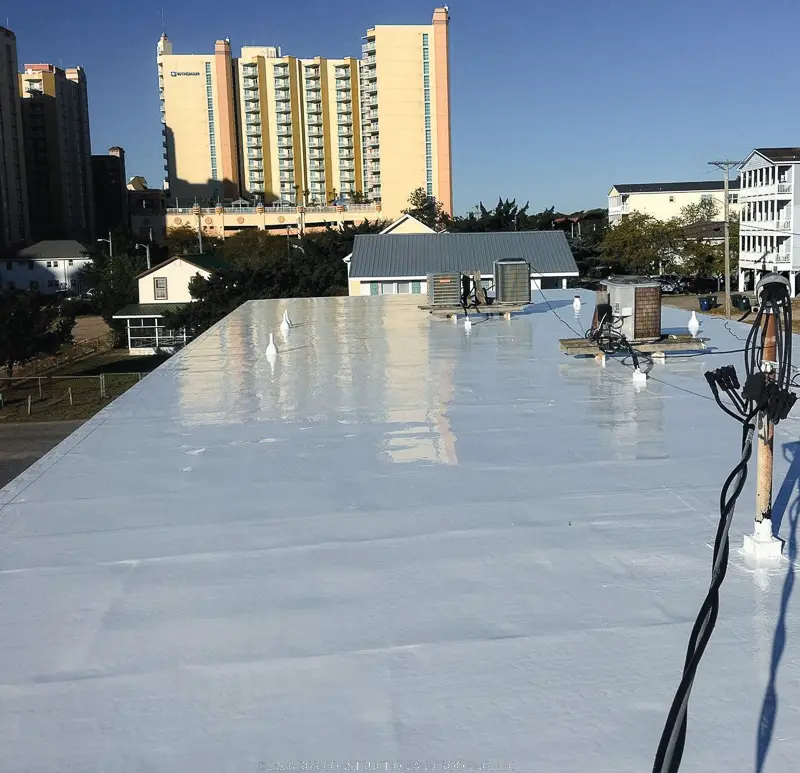
A reflective roof can reduce solar heat absorbed at the roof surface, but utility savings are not automatic. Climate, insulation, the existing roof, and HVAC performance influence the outcome. A coating should not be sold with a guaranteed energy-payback number without an appropriate building-specific analysis.
The U.S. Department of Energy’s cool-roof guidance discusses these factors. Evaluate reflectivity alongside durability, compatibility, moisture control, and the rest of the assembly.
Repair, Restore, or Replace?
A localized defect on a serviceable roof may justify repair. A suitable existing system may support a defined restoration approach. Widespread deterioration or moisture can require more extensive replacement work. The recommendation should explain the evidence and the limitations of each option.
RGR can coordinate roofing with related construction repairs where the building needs more than a new surface. Request a commercial roof assessment with the address, building use, leak history, and any prior roof records.
Commercial Roofing Questions
How do I choose a roofing system for my commercial building?
The best option depends on the building, existing assembly, exposure, drainage, use, and budget. Compare complete systems rather than selecting by material name alone.
Can I coat a leaking roof instead of replacing it?
Only if the existing roof is a suitable candidate. Underlying moisture, failed details, and damaged materials must be addressed as required before coating.
My roof warranty expired. Does that mean I need a new roof?
No. Replacement should be based on condition, repairability, and building needs. Warranty expiration alone does not establish that the roof has failed.
Call RGR at 910-408-6026 to discuss your Wilmington-area commercial property.
Share this article