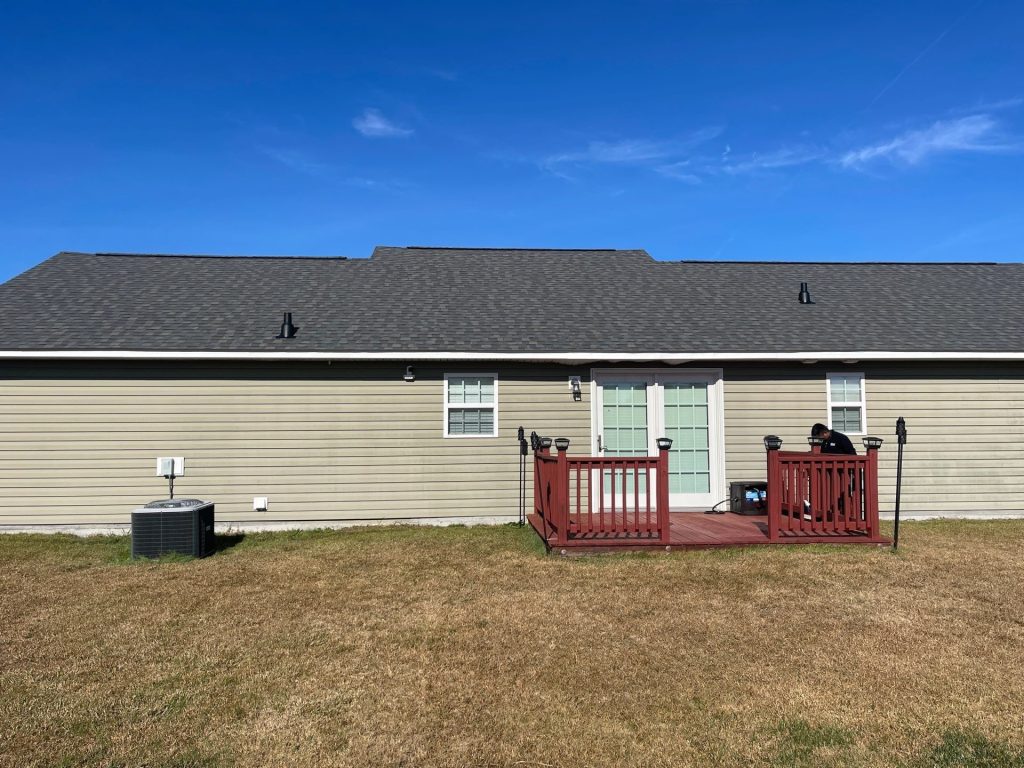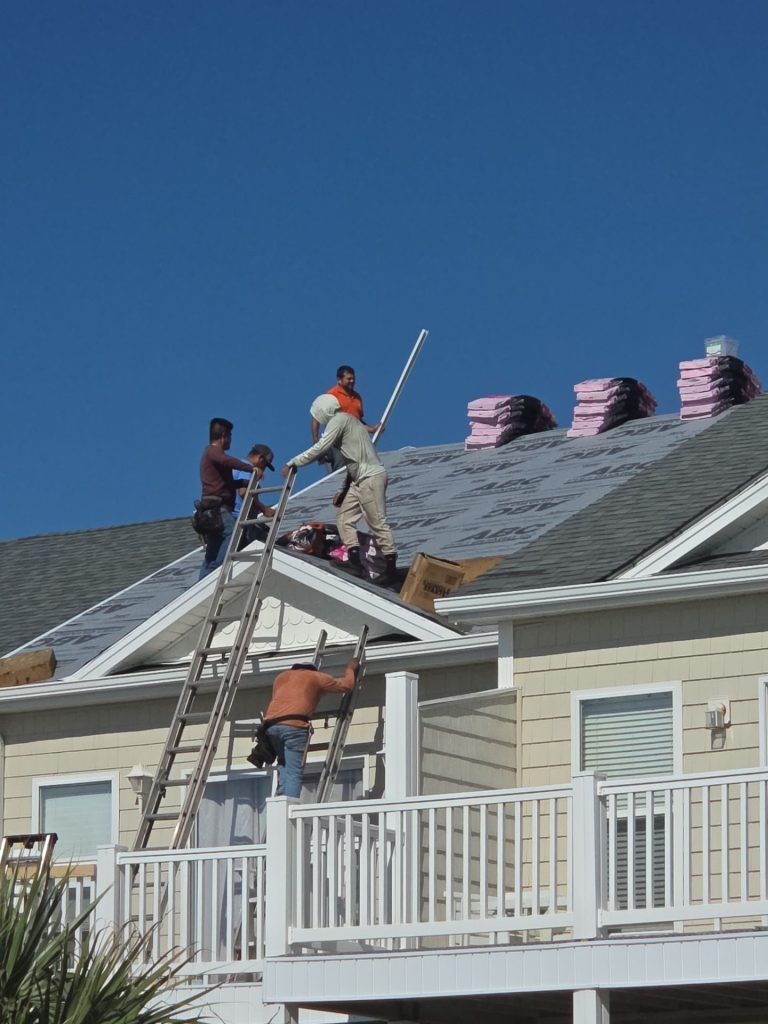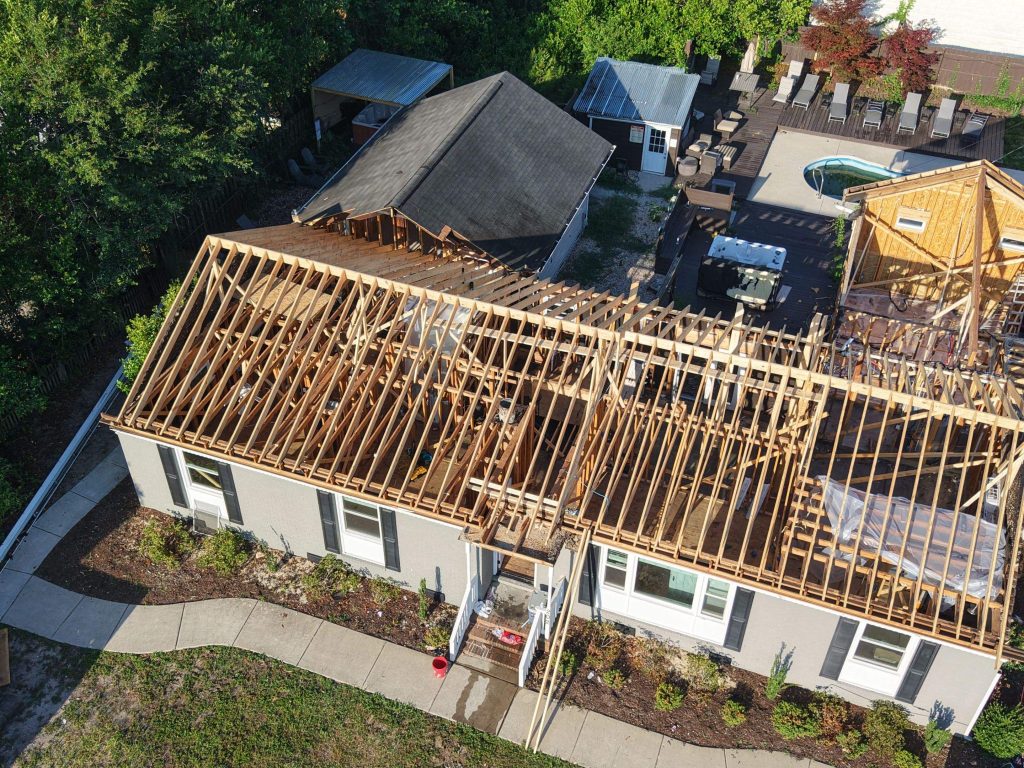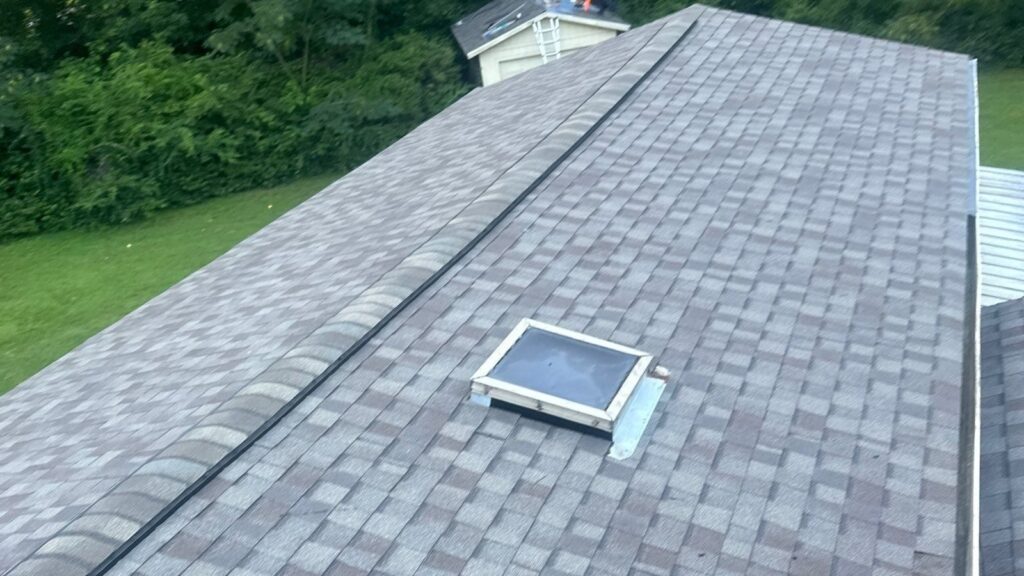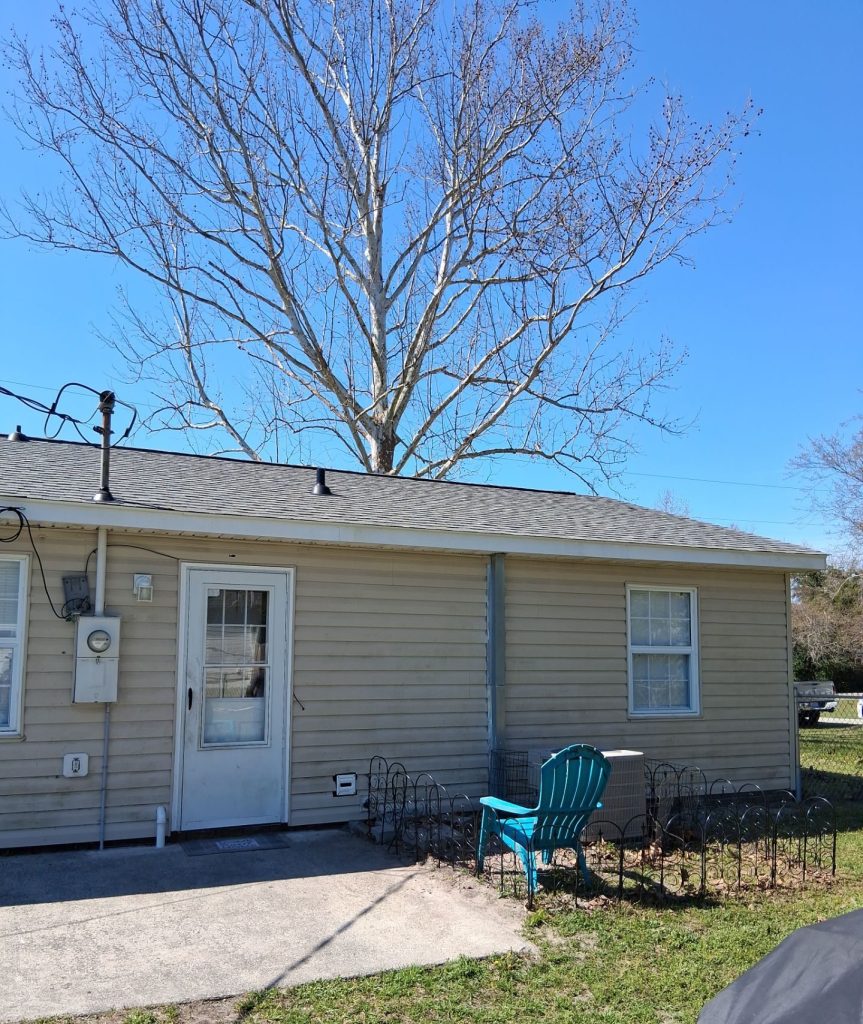
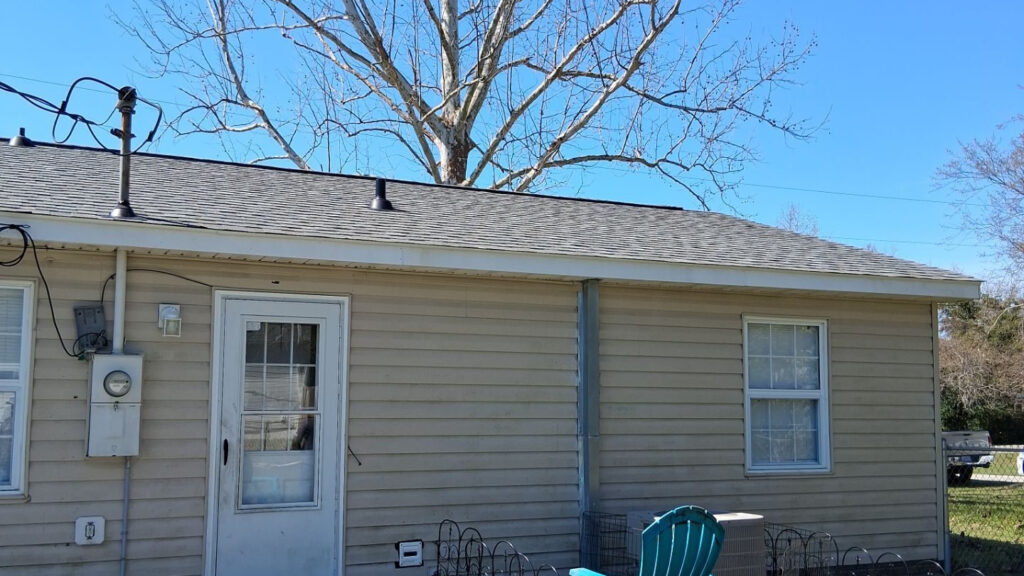
RGR project photo: installed gray shingle roofing above a rear patio in Wilmington, NC. The finished roof photo does not show concealed conditions beneath the shingles.
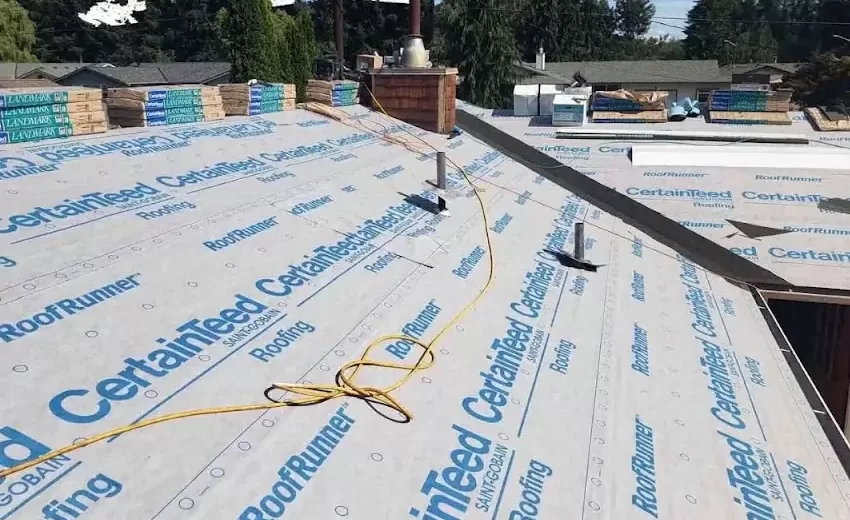
A full roof tear-off removes the old covering so the roof deck can be evaluated before the new roofing system is installed. For a Wilmington homeowner, the key questions are what the removal includes, how findings will be documented and how any additional work will be approved. Those details should be settled in the written scope before installation begins.
A new shingle color is easy to picture. The work beneath those shingles is harder to see, but it deserves just as much attention when you plan a roof replacement. Removal, inspection and preparation are separate parts of the job, and a useful proposal explains how they fit together.
This guide focuses on the tear-off stage of a full roof replacement: the information to give your contractor, the questions to settle before the crew arrives and the records to keep afterward. It is a way to make the work easier to understand without expecting you to diagnose the roof or supervise installation yourself.
Define exactly what will be removed
Ask the contractor to describe the removal and disposal work in plain language. Which roof sections are included? How will existing roofing materials be handled? Are a porch, addition or lower roof included in the same scope? A short description of each area helps prevent different assumptions about what the contract covers.
Have any exceptions identified before you sign. If a section of the home has a different roof material or a connection to nearby siding, ask how that detail will be handled. The purpose is to establish the boundaries of the work so that a discovery during removal can be compared with an agreed starting point.
Ask what the inspection can actually establish
A finished roof surface does not reveal every condition beneath it. Removing the old covering provides access to evaluate the deck and identify necessary preparation before installation. The Asphalt Roofing Manufacturers Association identifies deck inspection and repair as benefits of roof replacement. The initial estimate should explain what can be assessed before removal and what remains uncertain.
Bring the information you already have: approximate installation dates, previous repair invoices and a description of any leaks. If a stain appeared during a particular storm, say when and where. Do not climb onto the roof to count layers or lift shingles. Let the contractor explain the findings and any limitations of the initial assessment.
Useful questions include: Which areas could you inspect? What evidence supports the recommendation? What remains uncertain until removal begins? Clear answers help distinguish an observed condition from a reasonable allowance for concealed work.
Separate observations from assumptions
Ask the contractor to explain what has actually been observed and what is being allowed for in the proposal. A reported leak, a visible stain and the condition of a concealed component are different pieces of information. Keeping them separate helps you understand why further evaluation may be needed once the covering is removed.
If the scope includes an allowance, ask how it will be reconciled with the work actually needed. If a potential issue is excluded, ask how it would be handled if discovered. Neither a reassuring appearance from the ground nor a general warning about hidden damage should replace an explanation tied to your home.
Compare the whole scope, not just the shingle
Request a written comparison that identifies the existing layers, removal and disposal, deck assessment, underlayment, flashing, roof penetrations and ventilation work. The goal is not to design the roof yourself. It is to understand what each contractor has included and where their scopes differ.
For example, “replace roof” does not tell you how an existing pipe penetration or roof-to-wall connection will be handled. Ask whether these details are included, what will be replaced and what may require additional work after inspection. Have the contractor identify any exclusions in ordinary language.
Review product selection alongside the preparation work. A premium shingle name alone does not describe the preparation beneath it. Our roof replacement quote guide can help you organize the other questions in the proposal review.
Agree on how concealed repairs will be approved
Even a careful initial visit cannot settle every concealed condition. Before work starts, establish how the contractor will notify you if removal exposes an issue outside the original scope. Ask who will call, what photographs or explanation you will receive and how the additional work will be documented.
Where an estimate includes allowances or unit prices, ask what they cover and how quantities will be measured. If it excludes a type of repair, clarify who will handle it and how that affects the schedule. Avoid leaving these decisions to an urgent conversation while the roof is open.
You do not need to predict every possible discovery. You do need an agreed process for reviewing the finding, understanding the proposed remedy and authorizing a change. Keep that process with the signed scope so everyone is working from the same expectations.
Discuss disruption and protection before installation day
Ask how the crew plans material delivery, debris handling and protection around the home. Identify parking, pets, outdoor furniture and any areas that need access during the job. Tell the contractor about shared driveways or other site constraints early enough to plan around them.
Discuss the weather plan and how unfinished areas will be protected if work is interrupted. Ask how the team will communicate a delay, and who your point of contact will be. A promised duration should be understood alongside the actual scope and the possibility of concealed repairs, not treated as an unconditional finish date.
Leave the decision meeting with three clear answers
First, know which areas and materials the removal includes. Second, understand how the exposed roof will be evaluated and prepared. Third, know how changes and completion records will be handled.
Ask what photographs, product information and warranty documents you will receive at completion. Keep them with the contract and any approved changes. They provide a useful record of what was installed and what work was performed, without relying on memory when a future question comes up.
RGR Construction and Roofing serves Wilmington homeowners with roofing and construction work. To discuss your roof, request an RGR estimate with the property address, a short description of your concerns and any previous repair information. Ask for a recommendation that explains the scope and the reasons behind it.
Frequently asked questions
What does a full roof tear-off include?
It involves removing the existing roof covering as part of a roof replacement. Your written scope should identify the roof areas, materials, debris handling and disposal included. Ask about porches, additions and roof-to-wall details separately so the limits of the work are clear.
Does tearing off the roof mean all the decking must be replaced?
Not automatically. Removal exposes the deck so its condition can be evaluated. Ask how necessary repairs will be identified, documented, priced and approved. The proposal should distinguish planned roof replacement work from additional deck work that may be needed after inspection.
What should I tell the contractor about an existing leak?
Describe where you noticed it, when it appeared and any previous repairs. Share photographs taken safely from inside or from the ground. Ask how investigation and any related repair work are addressed in the scope; do not assume the leak source has been confirmed from a stain alone.
How should additional work discovered during tear-off be handled?
Agree on a process before installation. Ask who will contact you, what photographs or explanation you will receive, how pricing will be presented and how your authorization will be recorded. Keep approved changes with the original contract.
How can I discuss a roof replacement with RGR in Wilmington?
Request an estimate through the RGR contact page and include your property address, roof concerns and any previous repair records. Ask the team to explain the proposed removal, inspection and replacement scope, including any items that need further evaluation.
Share this article