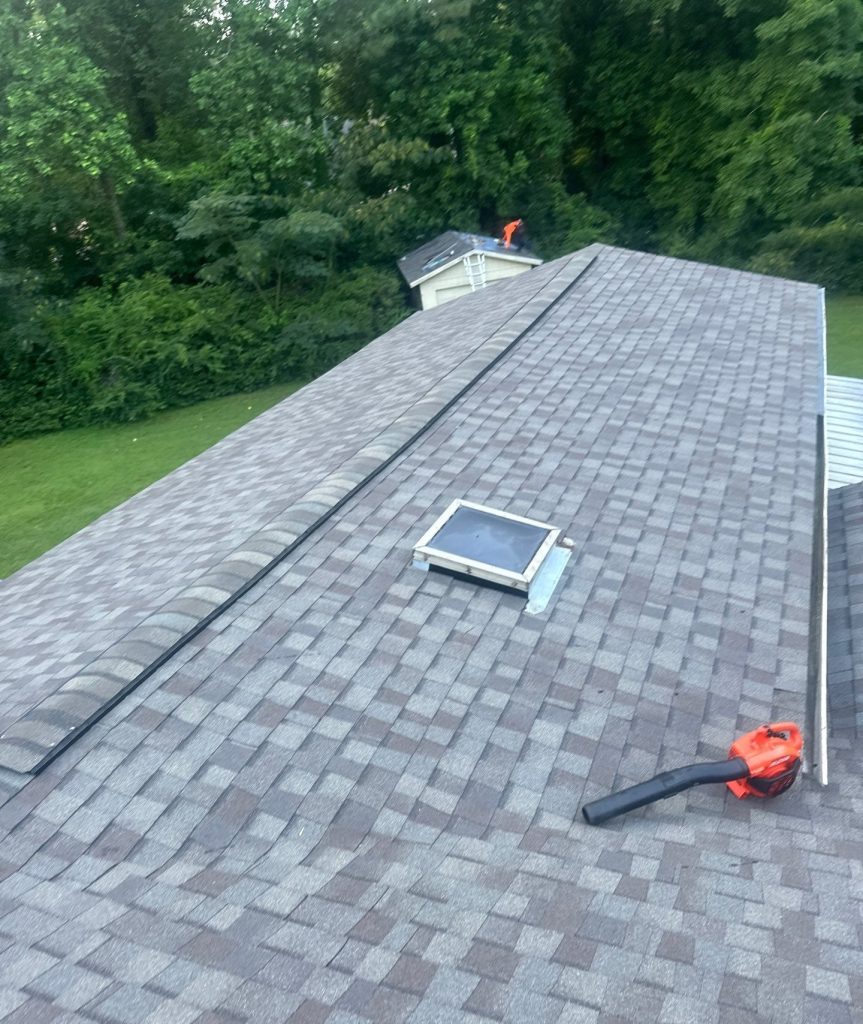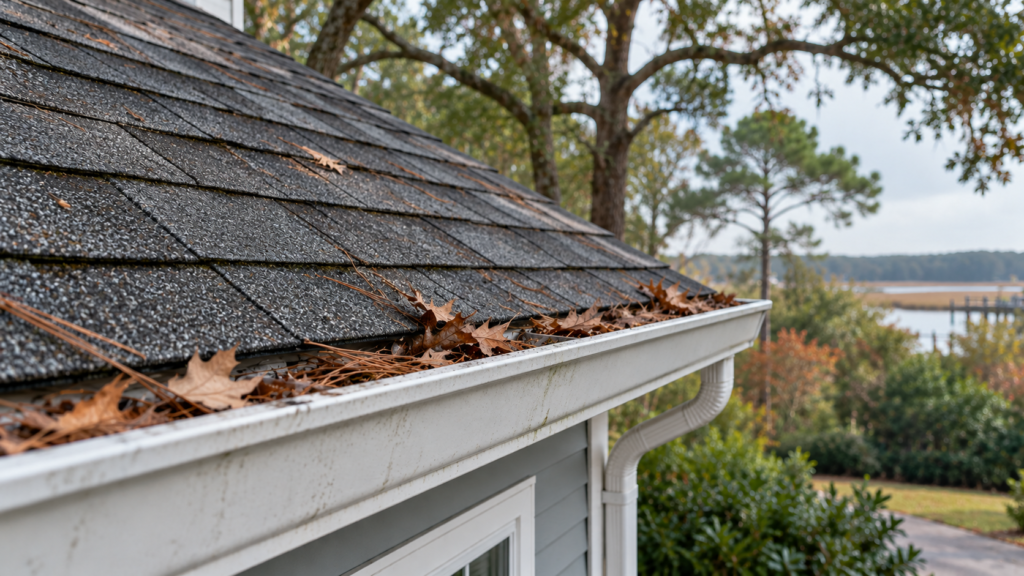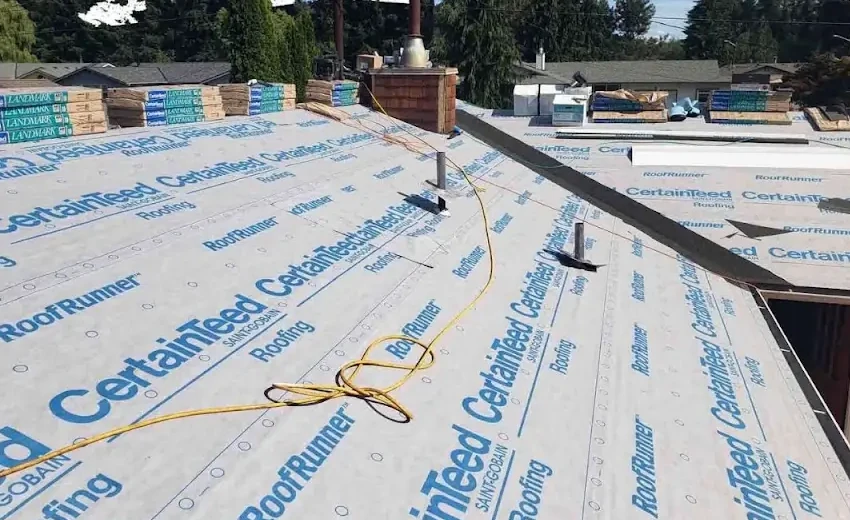


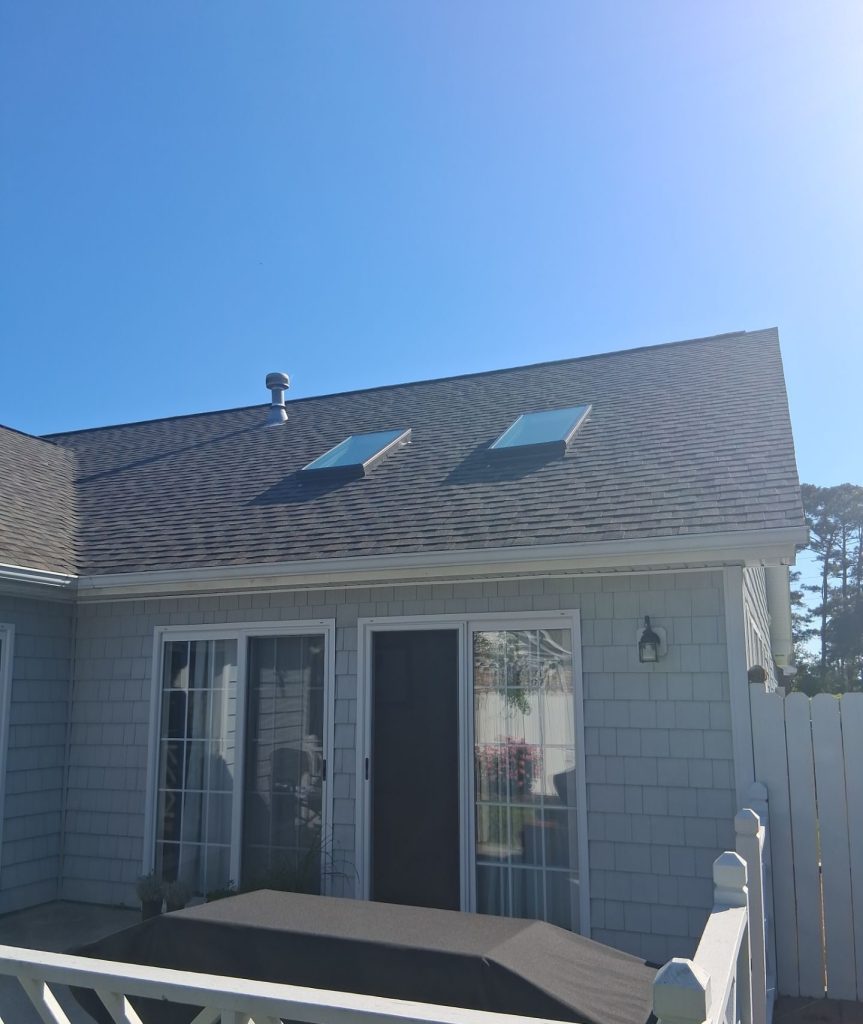
RGR project photo: two skylights in a shingled roof in Wilmington, North Carolina. The photograph illustrates the topic; it does not identify a defect or product brand.
You do not automatically need new skylights with a new roof, but you should decide before reroofing starts. Ask the contractor to assess each unit, identify the correct flashing system and explain the consequences of keeping it. Replacement deserves closer consideration when a skylight is damaged, has unresolved problems or cannot be integrated reliably with the planned roof. A sound unit with suitable components may be a candidate to remain.
For a Wilmington homeowner, the useful question is less “Does it leak today?” and more “What exactly will be sitting inside my new roof when this job is finished?” The glass, frame, surrounding roof and interior finish all belong in that conversation. Settle those details while comparing estimates, when there is time to identify products and make choices.
Bring the skylights into the roof estimate early
Walk through the house with the estimator and point out every skylight, including units over a stairway or in an addition. Explain anything you have noticed: a stain that appears after particular weather, difficult operation, fogging, cracked glass or previous repairs. Share invoices or product information you already have. Those observations help frame the inspection; they do not establish the cause of a problem by themselves.
Ask for a recommendation for each unit. “Keep the skylights” is incomplete if the estimate does not explain what happens to the surrounding flashing. Likewise, “replace skylights” leaves important decisions open if no product, size or interior scope is named. With several units, one recommendation may not fit them all.
Identify what is there before choosing a replacement
The installer should establish the existing mounting arrangement and dimensions, then check a proposed unit against the roof and its installation instructions. A familiar-looking product is not proof of a suitable fit. Include the roof covering in the discussion, particularly if your project changes the roofing material.
A model label can help identify an existing unit. VELUX explains that label locations differ between its deck-mounted and curb-mounted products, and that sizing and ordering belong before installation day. Gather accessible paperwork or photographs, but leave rooftop identification and measurement to the contractor. See the manufacturer’s replacement installation overview.
For an older unit with no readable identification, ask how the installer will establish the opening size and compatible options. A quote should say what has been verified and what remains subject to inspection. That distinction is more useful than a confident product recommendation based only on an indoor photograph.
Discuss the skylight and the flashing separately
A skylight is one part of a roof opening. Flashing manages the connection between that opening and the surrounding roof materials. A new unit does not make those adjoining details unimportant, and a stain near a skylight does not tell you which component needs attention.
The U.S. Department of Energy’s building-science guidance emphasizes integrating skylight flashing with the roof’s water-control layers, including the underlayment and roof covering. Its skylight flashing guidance also identifies roof replacement as an opportunity to address that integration. Ask the roofer to explain the planned assembly for your particular opening, rather than treating flashing as an unspecified accessory.
If you have an active leak, tell the contractor when it happens and where water first becomes visible. Request an inspection and documented findings through RGR’s roof repair service. Avoid selecting a repair solely because someone has suggested another layer of sealant. The proposed work should follow an explanation of the condition found.
Compare two clearly written options
If retaining the skylight is a reasonable option, ask for that scope alongside a replacement option. You are comparing two finished outcomes, including the work around the unit, rather than just the price of a new piece of glass.
- Keep the existing unit: Identify it, record its observed condition and specify the flashing and surrounding roofing work. State any limitations on the recommendation and clarify responsibility for the retained unit.
- Replace the unit: Name the proposed product and mounting arrangement, included flashing components and any work to the opening. List removal, disposal and interior finishing clearly.
- For either option: Explain how concealed wood damage will be documented, priced and approved if it becomes visible during removal.
Ask the contractor to walk you through the differences. If one option excludes painting or changes the amount of interior work, it is not directly comparable to an option that includes those tasks. Keep the decision and any exclusions together in the written scope.
Look up from inside the room, too
The roof work is outside, but you will live with the skylight from inside. Consider whether you like its position, how you use the room and whether you want an operable unit or a fixed one. Discuss shade preferences and how any proposed controls would be reached or operated. Confirm these features against the selected product rather than assuming they come with every replacement.
Ask whether the proposal preserves the existing interior opening and trim. If it does not, have the contractor describe the affected ceiling, light shaft or finishes and identify who completes the repairs. A useful question is: “When the roofing crew leaves, what work, if any, will still remain inside?” That makes the handoff much clearer.
Confirm the plan before shingles come off
Before setting the roof installation date, confirm that the chosen units and required components are available and that the written scope reflects your final decisions. VELUX’s replacement sequence involves the unit, flashing, underlayment and surrounding shingles. Coordinating those items is a practical reason to resolve the skylight decision as part of the roofing plan.
Discuss access to the rooms below, protection of interior belongings and who to contact if the crew uncovers a condition that changes the work. Ask what temporary protection is planned if weather interrupts the job. You do not need to direct installation details; you need a shared understanding of the work and the approval process.
Keep the closeout documents together
At completion, retain the product information, invoice and applicable warranty documents with your roofing records. Have the contractor identify which terms cover the skylight product, flashing installation and roofing workmanship. Do not assume coverage for a retained skylight changes just because the shingles are new. Record any remaining interior work before calling the project finished.
Planning a roof replacement in Wilmington? Request an estimate from RGR Construction and Roofing and mention your skylights when scheduling. Bringing them into the first conversation gives you time to compare a complete scope and choose the result you want above—and inside—your home.
Frequently asked questions
Can I keep a skylight that is not leaking?
Possibly. A dry ceiling is useful information, but it does not establish the unit’s condition or whether suitable flashing is available for the planned roof. Ask the installer to identify the skylight, inspect it and document the proposed flashing work and any limitations before agreeing to retain it.
Does a stain beside a skylight mean the entire unit needs replacing?
No single stain establishes that. Tell the contractor when it appeared, whether it changes during rain and what repairs have already been attempted. The inspection should distinguish the condition of the unit from the surrounding roof connection before a repair or replacement is recommended.
Will a replacement skylight fit my existing interior opening?
That must be checked against the existing dimensions and the proposed product. Ask whether the quote preserves the opening, trim and interior finishes. If modifications are needed, have the scope identify the affected work and who handles drywall, trim and painting before you approve the order.
What should a roof estimate say about skylight flashing?
It should identify the planned flashing work for each opening and its compatibility with the skylight and roof covering. Ask which components are included and how they connect to the surrounding roofing assembly. A general promise to seal around the skylight is not a clear description of that scope.
Does a new roof warranty also cover my old skylights?
Do not assume it does. Request the actual product and workmanship terms and ask the contractor to explain how retained skylights are treated. Keep those written terms with the final roof scope so you know which company to contact about a skylight product issue versus roofing or installation work.
Share this article